
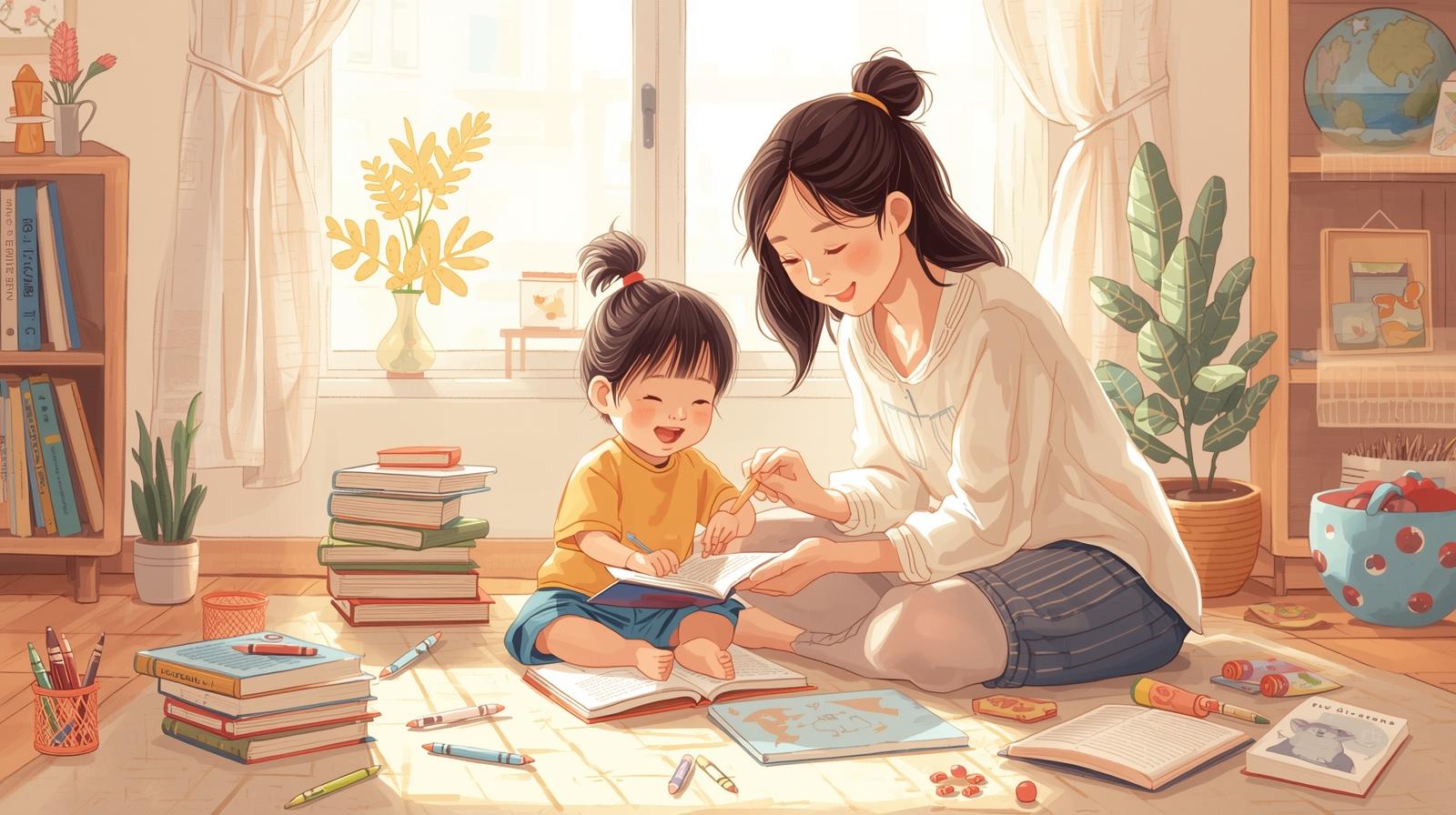
Many parents ask themselves, “If early learning is important, should my toddler start school early too?” With so much advice around milestones, worksheets, and readiness, it’s easy to feel confused. This blog gently explains why early learning does not mean early schooling, and how the right kind of experiences at home can support your child’s development—without pressure, stress, or rushing childhood.
“I don’t want my child to fall behind—but I don’t want to push either.”
If your child is under 3, this inner conflict is very real. You want to give them a strong start, but you also want them to enjoy being little. Here’s the reassuring truth: learning starts from birth, but schooling does not need to.
Early learning and early schooling are not the same thing—and understanding the difference can lift a huge weight off your shoulders.
Early learning vs early schooling: what’s the difference?
Early learning (what toddlers need)
Early learning happens naturally through:
- Play
- Movement
- Talking and listening
- Exploring objects
- Emotional connection
It is child-led, flexible, and joyful.
Early schooling (what toddlers don’t need)
Early schooling usually involves:
- Structured lessons
- Long sitting periods
- Academic goals
- Performance expectations
This kind of structure is not developmentally appropriate for children under 3.
Why early learning does not mean early schooling
1) Toddlers learn best through play, not instruction
When toddlers stack blocks, pretend to cook, or explore a cupboard, they are learning:
- Cause and effect
- Problem-solving
- Language
- Social interaction
Play builds the brain in ways worksheets cannot at this age.
2) Emotional development comes before academics
A child who feels safe, confident, and supported:
- Adapts better to school later
- Learns with curiosity instead of fear
- Builds resilience
Early schooling can sometimes shift focus away from emotional needs—too soon.
3) The brain develops in stages
Under 3, the brain is wired for:
- Sensory experiences
- Movement
- Relationship-building
Formal schooling expects skills that develop later. Early learning respects these natural stages.
4) Pressure can reduce love for learning
When learning feels like performance:
- Curiosity drops
- Fear of mistakes increases
- Confidence can suffer
Children who enjoy learning early are more likely to enjoy school later.
What early learning should look like at home
Talk, talk, talk
Narrate daily life—meals, walks, bath time. Language grows through conversation.
Read together (briefly is enough)
Let your child flip pages, point, or walk away. Interest matters more than finishing.
Encourage movement
Climbing, dancing, crawling, and walking all support brain development.
Allow free scribbling
Crayons and paper help fine motor skills—no tracing required.
Follow your child’s curiosity
If they love vehicles, music, or water—lean into it.
Benefits of choosing early learning over early schooling
This approach supports:
- Emotional development: Security and confidence
- Cognitive development: Curiosity and thinking
- Physical development: Coordination and strength
- Social development: Communication and empathy
These are the true foundations for later academic success.
A gentle reassurance for parents
You are not delaying your child’s future by avoiding early schooling. You are protecting their childhood while strengthening their readiness. Learning does not need classrooms, timetables, or pressure at this age—it needs connection.
You are doing enough.
You are doing it right.
Conclusion: learning begins early—schooling can wait
So, why does early learning not mean early schooling?
Because learning is natural, continuous, and joyful—while schooling is structured and timed for later readiness.
Choose play over pressure.
Choose connection over comparison.
Choose trust in your child’s pace.
These small, thoughtful choices today are quietly building confident learners who will be ready—not rushed—when school truly begins. 🌱
Leave a Reply