
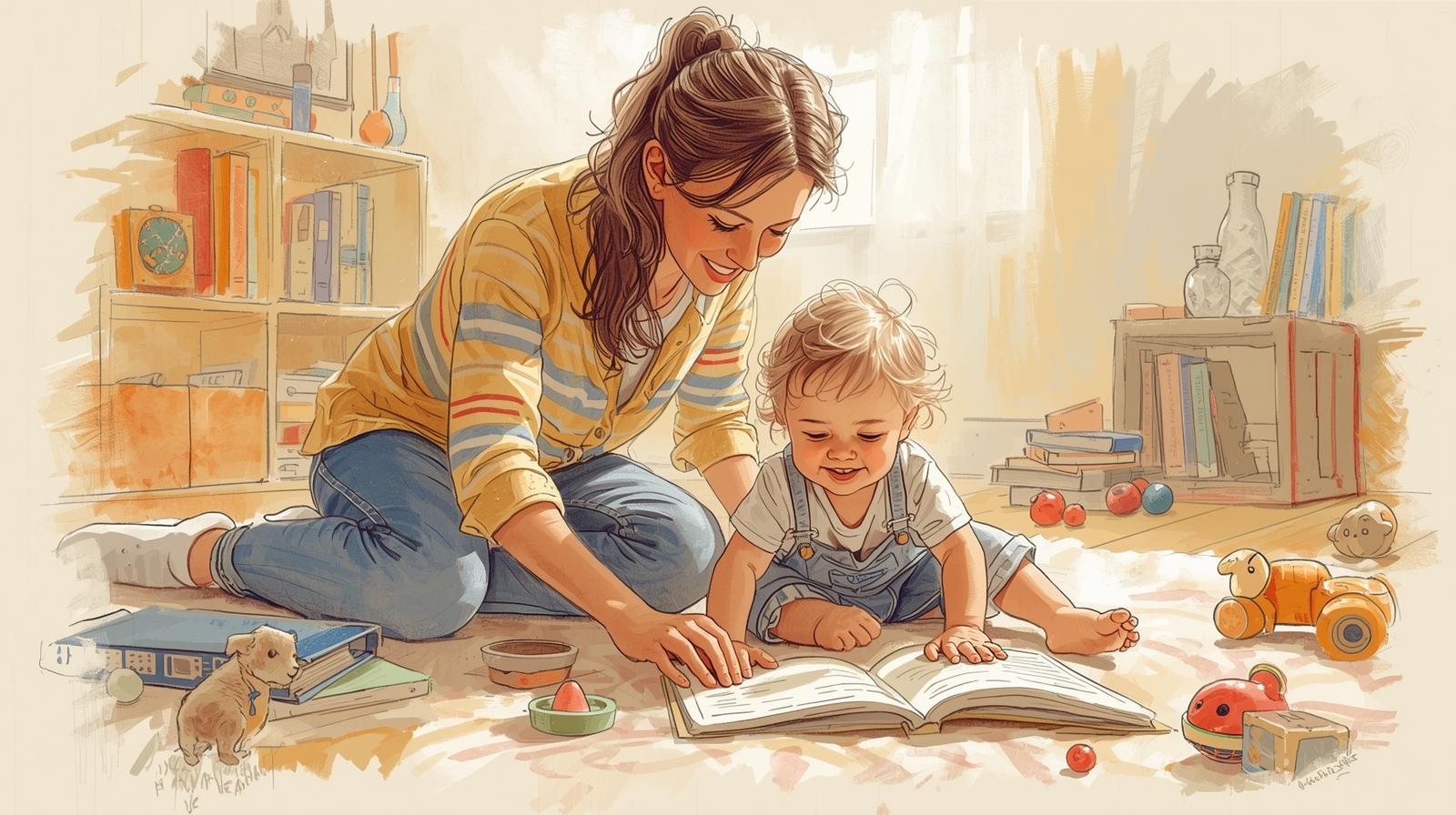
A gentle guide for parents of children under 3
Before nursery, children don’t need to master ABCs or numbers. What truly matters are everyday life skills—communication, emotional security, curiosity, independence, and social confidence. This blog explains what skills matter more than ABCs before nursery, why they’re important, and how parents can nurture them through simple, loving daily interactions at home.
“Should my child already know ABCs?” — You’re not alone
If you’re a parent of a toddler, you’ve probably asked yourself this question—maybe after a relative compared milestones or a preschool brochure listed letters and numbers. Take a deep breath. 🌱
The truth is comforting: before nursery, children don’t need academic skills. What they do need are strong foundations that help them feel safe, confident, and ready to learn when the time comes.
Early childhood isn’t about rushing learning. It’s about building the right skills in the right order.
What skills matter more than ABCs before nursery?
Between birth and age three, a child’s brain grows rapidly through experiences, relationships, and movement. These are the skills that truly shape school readiness—and life readiness.
Emotional security: the foundation of all learning
A child who feels emotionally safe learns better—now and later.
When your toddler cries and you respond, when you hug them after a fall, when you patiently listen to their babbling—you’re teaching them:
- I am safe
- My feelings matter
- The world is trustworthy
These emotional skills help children adjust to nursery routines, caregivers, and new environments far more than knowing letters ever could.
Simple things you can do today:
- Name emotions: “You look upset,” “You’re excited!”
- Offer comfort without rushing or scolding
- Be predictable with routines (meals, sleep, play)
Communication skills (not reading, just connecting)
Before ABCs come sounds, gestures, words, and expressions.
When toddlers point, babble, or use half-words, they’re learning how communication works. Talking with your child—not testing them—builds strong language foundations.
Real-life example:
Your child hands you a toy and says “ba.” When you reply, “Ball! You gave me the ball,” you’ve just supported language development naturally.
Try this at home:
- Talk through daily activities (“Now we’re washing hands”)
- Sing simple songs and rhymes
- Read picture books without pressure to identify letters
Independence & self-help skills: tiny confidence boosters
Nursery expects children to try—not to be perfect.
Simple abilities like:
- Attempting to feed themselves
- Putting toys away
- Trying to wear shoes
These actions build confidence, coordination, and resilience.
A child who believes “I can try” adapts better than one who can recite alphabets but feels helpless.
Encourage gently:
- Allow messes during self-feeding
- Offer choices (“Red cup or blue cup?”)
- Praise effort, not outcome
Social skills: learning how to be with others
Sharing doesn’t come naturally at two—and that’s okay.
Before nursery, social skills look like:
- Watching other children
- Playing side-by-side
- Learning to wait for a turn (with help)
These early interactions teach patience, empathy, and cooperation over time.
Support social growth by:
- Arranging short, pressure-free playtimes
- Modeling kindness and patience
- Avoiding labels like “shy” or “naughty”
Curiosity & love for learning (the real school readiness)
Children are born curious. When we protect that curiosity, learning follows naturally.
When a toddler:
- Opens cupboards
- Drops objects repeatedly
- Asks “why” with their eyes
They’re learning problem-solving, cause-and-effect, and creativity.
Nurture curiosity by:
- Letting your child explore safely
- Answering questions simply
- Avoiding over-structuring playtime
A gentle reminder for parents 💛
You don’t need flashcards.
You don’t need comparison.
You don’t need to rush.
Your everyday love—talking, comforting, playing, guiding—is already preparing your child beautifully for nursery and beyond.
Small, consistent moments matter far more than early academics.
Final thoughts: small steps, lifelong impact
When you focus on what skills matter more than ABCs before nursery, you’re giving your child something priceless—a strong emotional and developmental foundation.
Trust yourself. Trust your child.
Learning will come—right on time.
Leave a Reply