
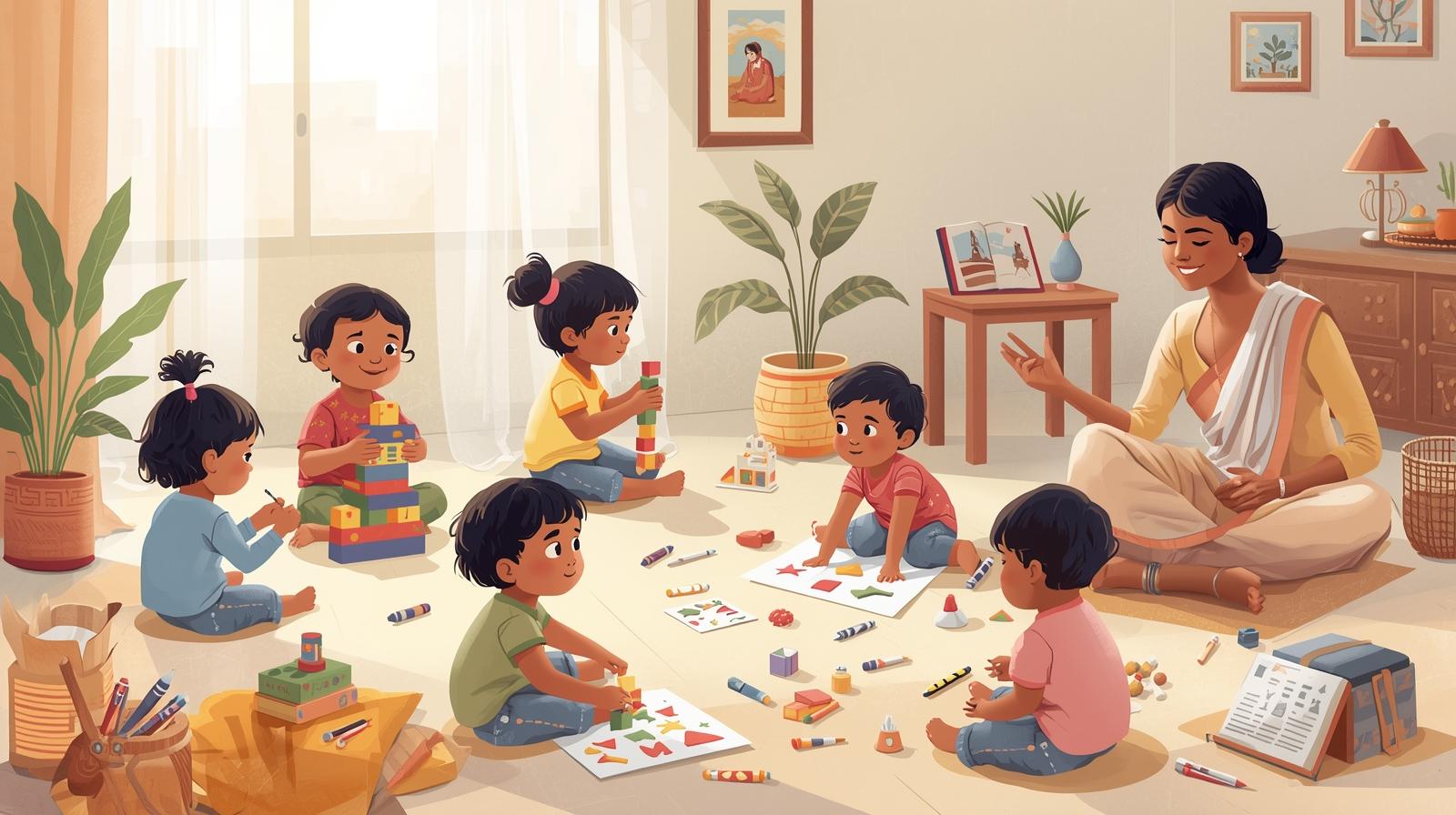
Looking for meaningful skill development activities for toddlers in India that don’t involve pressure or expensive classes? This guide helps parents of children under 3 understand how everyday Indian home routines, play, and interactions can naturally build essential life skills—laying strong foundations for confident early childhood development.
“Am I doing enough for my toddler’s development?”
This is one of the most common worries parents share—especially first-time parents. With so many opinions around early learning, classes, and milestones, it’s easy to feel unsure.
Here’s a reassuring truth: toddlers don’t need more activities—they need the right experiences. And in Indian homes, those experiences are already part of daily life.
What does skill development mean for toddlers (0–3 years)?
For toddlers, skill development is not about academics. It’s about learning how to:
- Express emotions
- Move confidently
- Communicate needs
- Interact with others
- Try small tasks independently
These skills grow best through play, repetition, and loving guidance.
Why early skill development matters
The first three years are critical for brain growth. Simple activities help support:
- Emotional development: Feeling secure and confident
- Cognitive development: Thinking, remembering, problem-solving
- Physical development: Balance, coordination, fine motor skills
- Social development: Comfort around family members and peers
Strong skills now make future learning easier and happier.
Skill development activities for toddlers in India
1. Language and communication skills
Indian homes are naturally language-rich.
Simple activities:
- Talk in your home language(s)
- Sing rhymes or bhajans
- Name objects during daily routines
Why it helps:
Builds vocabulary, listening skills, and emotional connection.
2. Physical and motor skills
Toddlers need space to move.
Encourage:
- Free floor play
- Walking, climbing, and running safely
- Simple games like rolling a ball
Why it helps:
Strengthens muscles, coordination, and body confidence.
3. Fine motor skill activities
Small hand movements matter.
Try:
- Stacking steel bowls
- Transferring objects between containers
- Scribbling with crayons
Why it helps:
Develops hand strength needed for future writing and self-help tasks.
4. Emotional and social skills
Toddlers are learning how to handle feelings.
Support this by:
- Naming emotions (“You look upset”)
- Comforting without rushing
- Allowing parallel play with other children
Why it helps:
Builds emotional intelligence and social confidence.
5. Independence through daily routines
Daily Indian household routines are full of learning.
Involve your child in:
- Putting toys away
- Helping with light chores
- Self-feeding and dressing attempts
Why it helps:
Encourages responsibility, confidence, and cooperation.
6. Sensory and cultural exposure
Indian homes offer rich sensory experiences.
Simple ideas:
- Exploring different textures (cloth, utensils)
- Listening to music and rhythms
- Observing festivals and family gatherings
Why it helps:
Stimulates brain development and cultural connection.
What skill development does not require
Let go of these common myths:
- ❌ Worksheets or drilling
- ❌ Early reading or writing
- ❌ Comparing with other children
- ❌ Strict schedules
Toddlers grow best in relaxed, loving environments.
A gentle reassurance for parents
Some days your toddler will be curious and cooperative. Other days—messy, emotional, or stubborn. That’s not failure—that’s development.
Your patience, presence, and consistency matter more than perfection.
Conclusion: small daily moments, lifelong skills
When it comes to skill development activities for toddlers in India, remember that the most powerful learning happens at home—through conversations, routines, play, and love.
Start small.
Repeat often.
Trust your instincts.
You’re not just helping your toddler grow—you’re shaping confident, capable beginnings for life. 🌱
Leave a Reply