
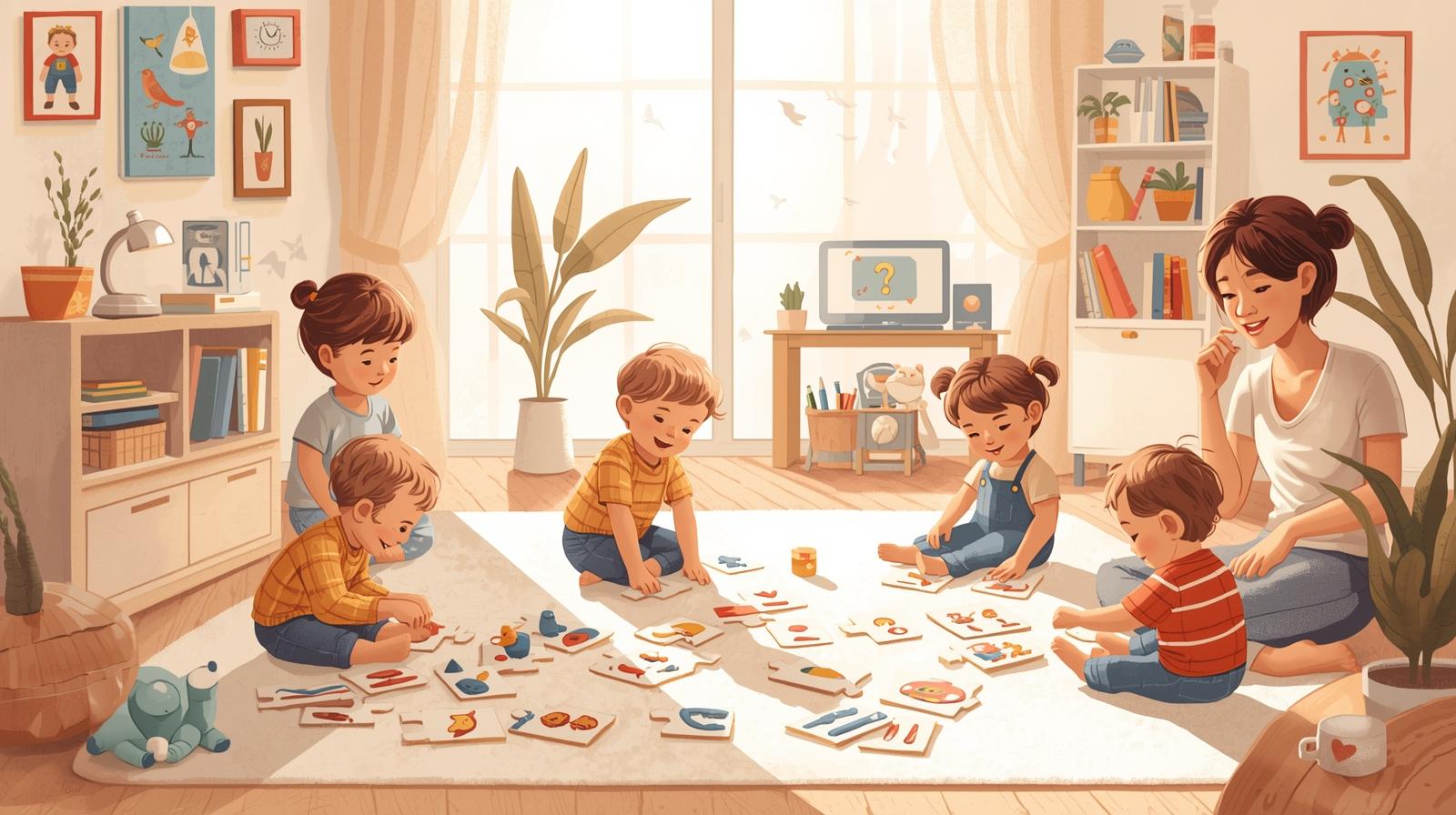
Looking for simple matching games to improve toddler thinking skills—without pressure, screens, or expensive toys? This guide helps parents of children under 3 use playful, everyday matching activities at home to boost thinking, focus, and confidence in a joyful, age-appropriate way.
“My toddler keeps matching things—does that really help learning?”
If your child loves putting lids on containers, pairing socks, or lining up toys, you might wonder if it’s just play—or something more. The reassuring answer is yes, it really helps. Matching games are powerful for toddler thinking because they build the brain’s ability to notice patterns, compare, and make decisions—skills that form the foundation for learning later on.
Why matching games are great for toddlers under 3
Matching activities gently support early development by strengthening:
- Cognitive skills: Observation, comparison, and problem-solving
- Language skills: Learning words like “same,” “different,” and names of objects
- Fine motor skills: Grasping, placing, and coordinating hands and eyes
- Emotional confidence: Feeling successful through simple wins
Best of all, toddlers enjoy matching—it feels natural and satisfying.
How matching builds toddler thinking skills
When toddlers match, their brains practice:
- Recognising similarities
- Remembering visual details
- Making choices
- Trying again when something doesn’t fit
These are early thinking skills that support attention, memory, and future learning—without any formal teaching.
Simple matching games to improve toddler thinking skills
1. Sock matching game
How to play:
Mix a few pairs of socks and invite your child to find the matching pairs.
Why it helps:
Builds visual discrimination and problem-solving.
2. Lid and container match
How to play:
Give your toddler safe containers and their lids. Let them try matching and closing them.
Why it helps:
Encourages trial-and-error thinking and hand–eye coordination.
3. Colour matching with toys
How to play:
Place coloured bowls on the floor and match toys by colour.
Why it helps:
Supports colour recognition and early categorisation skills.
4. Shape matching (real-life objects)
How to play:
Match everyday shapes—round plates, square boxes, rectangular books.
Why it helps:
Builds shape awareness and connects learning to real life.
5. Picture-to-object matching
How to play:
Use a picture book and match real objects to the pictures (ball, cup, spoon).
Why it helps:
Strengthens memory and language understanding.
6. Sound matching game
How to play:
Shake two containers with the same sound and let your child match them.
Why it helps:
Develops listening skills and auditory memory.
Tips to keep matching games stress-free
- Start with very few items (2–3 pairs)
- Let your child explore—don’t correct quickly
- Name what you see: “These look the same!”
- Stop when interest fades
- Celebrate effort, not accuracy
Short, happy play beats long sessions every time.
What matching games don’t need
Gently let go of these worries:
- ❌ Perfection
- ❌ Speed
- ❌ Worksheets or flashcards
- ❌ Comparing with other children
If your toddler mismatches, they’re still learning.
A gentle reassurance for parents
Some toddlers match early. Others take time. Both are completely normal. Thinking skills grow through repetition and play, not pressure. Your child is learning every time they try—even when they “get it wrong.”
Your calm presence makes learning feel safe and fun.
Conclusion: small matches, big thinking growth
When it comes to simple matching games to improve toddler thinking skills, remember that big learning comes from small, playful moments.
Pick one easy matching game today.
Play it together for a few minutes.
And trust that these joyful interactions are strengthening your toddler’s mind—one happy match at a time. 🌱
Leave a Reply