
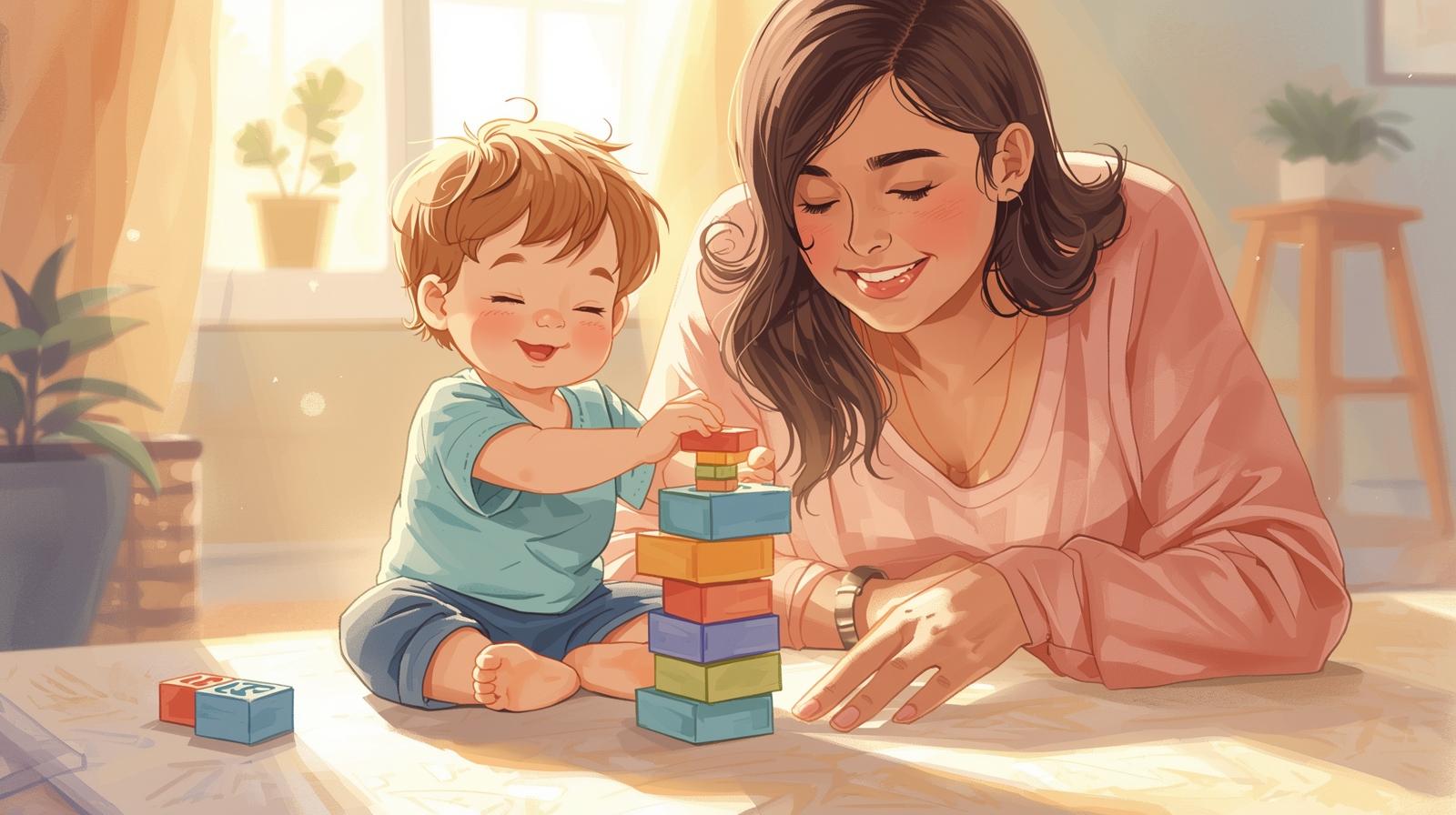
Wondering if your toddler is really learning while they play? This guide on learning through play: real examples for toddlers shows parents of children under 3 how everyday play moments build thinking, language, confidence, and skills—without pressure, lessons, or comparison.
“My toddler just plays all day… is that enough?”
If you’ve ever watched your child stack cups, open and close containers, or run back and forth laughing—and then wondered “Should I be teaching more?”—you’re not alone. Many parents worry that play looks too simple to count as learning.
Here’s the reassuring truth: for toddlers, play is learning. It’s how their brains grow, how skills develop, and how confidence is built—one joyful moment at a time.
What “learning through play” really means for toddlers
Learning through play means children learn by:
- Exploring with their hands and bodies
- Repeating actions they enjoy
- Making small discoveries
- Interacting with caring adults
There are no lessons, outcomes, or right answers—just curiosity and connection.
Why learning through play is so powerful in early childhood
Play-based learning supports the whole child:
- Cognitive development: Problem-solving, memory, and thinking
- Language development: Listening, understanding, and speaking
- Physical development: Balance, coordination, fine motor skills
- Emotional development: Confidence, security, and joy
- Social development: Turn-taking and shared attention
When learning feels safe and fun, it sticks.
Real-life examples of learning through play for toddlers
1. Stacking and knocking down
What it looks like:
Your toddler stacks cups or blocks—then knocks them down again and again.
What they’re learning:
- Cause and effect
- Hand–eye coordination
- Persistence
2. Filling and emptying containers
What it looks like:
Your child fills a box with toys, empties it, and repeats.
What they’re learning:
- Early math concepts (full/empty)
- Focus and control
- Problem-solving
3. Pretend play with daily objects
What it looks like:
A spoon becomes a microphone. A box becomes a car.
What they’re learning:
- Imagination and creativity
- Language and expression
- Social understanding
4. Sorting and matching toys
What it looks like:
Your toddler groups toys by colour, size, or type—sometimes imperfectly.
What they’re learning:
- Comparison and categorisation
- Visual memory
- Thinking skills
5. Singing action songs
What it looks like:
Clapping, jumping, or dancing to rhymes.
What they’re learning:
- Language and rhythm
- Body awareness
- Listening and memory
6. Book play (not just reading)
What it looks like:
Turning pages, pointing at pictures, naming objects.
What they’re learning:
- Vocabulary
- Attention skills
- Love for books
7. Helping with daily routines
What it looks like:
Putting toys away, self-feeding, wiping spills.
What they’re learning:
- Independence
- Confidence
- Responsibility
How parents can support learning through play
You don’t need to teach—just support.
Try this:
- Describe what your child is doing
- Ask simple, open-ended questions
- Follow your child’s lead
- Join in without taking over
Your presence deepens the learning.
What learning through play does not require
Let go of these worries:
- ❌ Worksheets
- ❌ Flashcards
- ❌ Structured lessons
- ❌ Constant correction
If your toddler is engaged and curious, learning is happening.
A gentle reassurance for parents
Some days play looks messy. Some days repetitive. Some days chaotic. All of it matters. You’re not missing teaching moments—you’re living them.
Your calm encouragement and shared joy are the greatest learning tools your child has.
Conclusion: play today, strong foundations tomorrow
When you think about learning through play for toddlers, remember that the small moments matter most.
Let them play.
Join them sometimes.
Observe often.
These everyday experiences are quietly shaping thinking, confidence, and a lifelong love for learning—one playful moment at a time. 🌱
Leave a Reply