
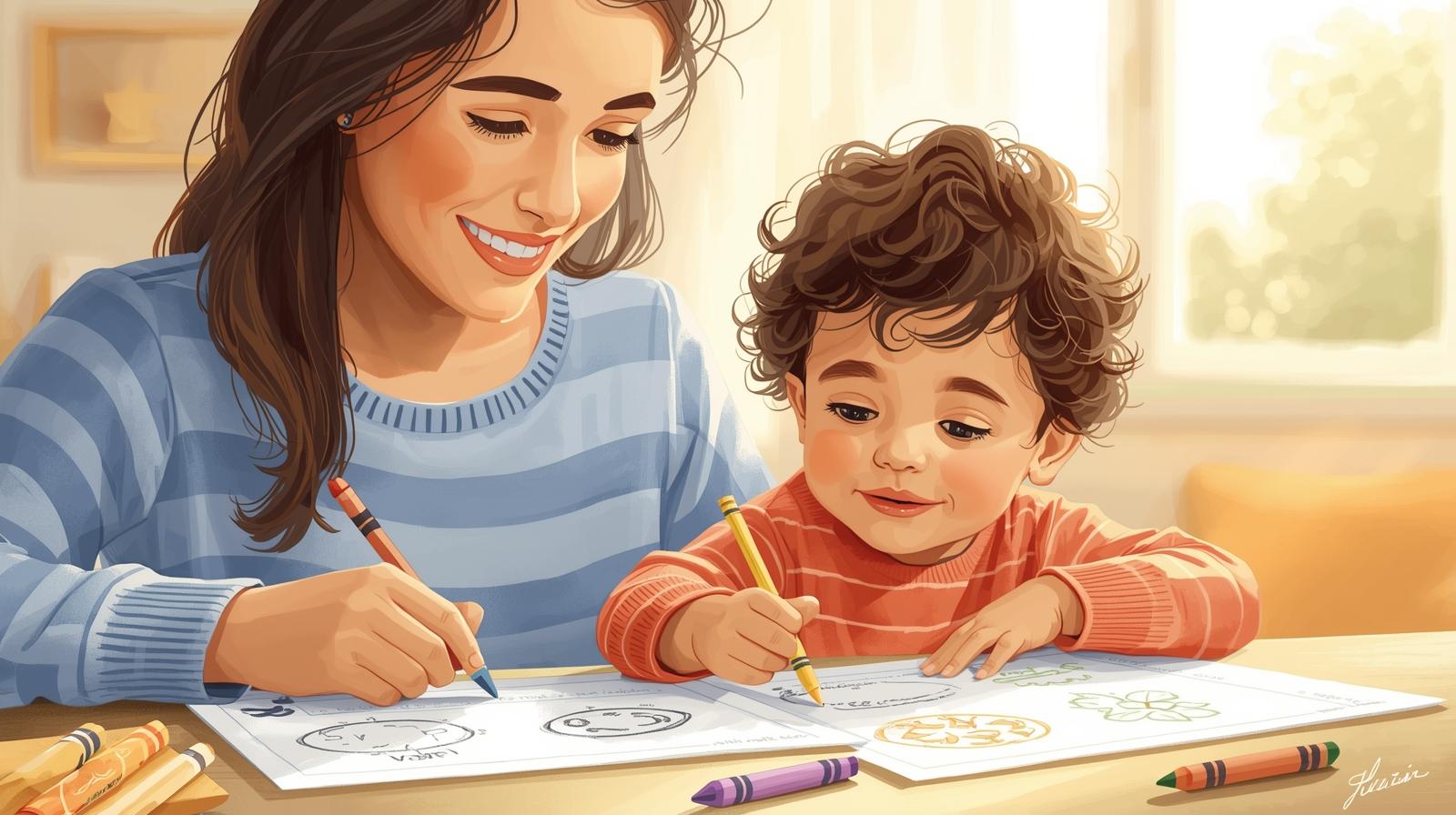
Wondering how to use worksheets for toddlers without pressure—especially when your child is under 3 and full of movement, curiosity, and short attention spans? You’re not alone. This gentle guide helps parents use worksheets thoughtfully—as a small, supportive tool alongside play—so learning stays joyful, relaxed, and age-appropriate.
“I want to help my toddler learn… but I don’t want to push.”
Many parents feel caught in the middle. On one side, there are colourful worksheets everywhere. On the other, there’s the fear of pushing too early or turning learning into stress. If your toddler scribbles for a minute and runs off, you might wonder, “Am I doing this wrong?”
Here’s the reassuring truth: worksheets can be used without pressure—if we change how we think about them.
What worksheets mean for toddlers under 3
For toddlers, worksheets are not lessons or assessments. They are simply:
- A way to explore paper and crayons
- An opportunity to move hands and fingers
- A moment of shared interaction with a parent
Completion, correctness, or sitting still are not the goal.
Benefits of using worksheets gently (when done right)
When worksheets are used playfully and occasionally, they can support:
- Fine motor development: Holding crayons, making marks
- Cognitive skills: Observing pictures, matching, noticing patterns
- Emotional development: Confidence from trying something new
- Routine comfort: Familiarity with sitting briefly and exploring paper
The key is how they’re used—not how often.
How to use worksheets for toddlers without pressure
1. Choose the right kind of worksheets
For toddlers under 3, the best worksheets are:
- Big pictures
- One simple task per page
- Lots of open space
- No instructions like “finish” or “correct”
Avoid worksheets that expect tracing letters, numbers, or neat colouring.
2. Sit with your child (don’t hand it over and walk away)
Your presence changes everything.
- Sit beside your child
- Talk about the pictures
- Smile and observe
This turns worksheets into connection time, not solo work.
3. Allow scribbling, tearing, and exploring
If your toddler:
- Scribbles outside lines
- Colours one corner only
- Turns the page quickly
- Tears the paper
That’s still learning. Exploration matters more than the result.
4. Keep it very short
Toddlers learn in bursts.
- 2–5 minutes is enough
- One worksheet at a time
- Stop at the first sign of disinterest
Ending early keeps learning positive.
5. Never correct or test
Avoid questions like:
- “Why didn’t you finish?”
- “Do it properly.”
- “This is wrong.”
Instead, try:
- “You used so many colours!”
- “I like how you tried.”
Praise effort, not accuracy.
6. Mix worksheets with lots of play
Worksheets should be a small part of the day.
Balance them with:
- Free play
- Outdoor movement
- Storytime
- Songs and pretend play
This keeps learning natural and whole.
How often should toddlers use worksheets?
For children under 3:
- Once or twice a week is plenty
- Some weeks, not at all—and that’s okay
- Follow your child’s interest, not a schedule
There is no benefit to daily worksheets at this age.
What parents don’t need to worry about
You can gently let go of these fears:
- ❌ “My child won’t sit still”
- ❌ “Other kids are doing more worksheets”
- ❌ “Nursery schools expect this”
Most nurseries focus on comfort, independence, and curiosity—not worksheet completion.
A gentle reassurance for parents
If your toddler is playful, curious, active, and emotionally secure, they are learning beautifully. Worksheets do not define intelligence or readiness. Your patience, presence, and trust matter far more than any printed page.
You’re not behind—you’re being thoughtful.
Conclusion: worksheets as support, not stress
When thinking about how to use worksheets for toddlers without pressure, remember this simple rule:
Worksheets should invite learning, not demand it.
Use them lightly.
Enjoy the moment together.
Let go when it’s time.
These small, calm experiences—combined with play and connection—are quietly shaping confident, happy learners for the years ahead. 🌱
Leave a Reply