
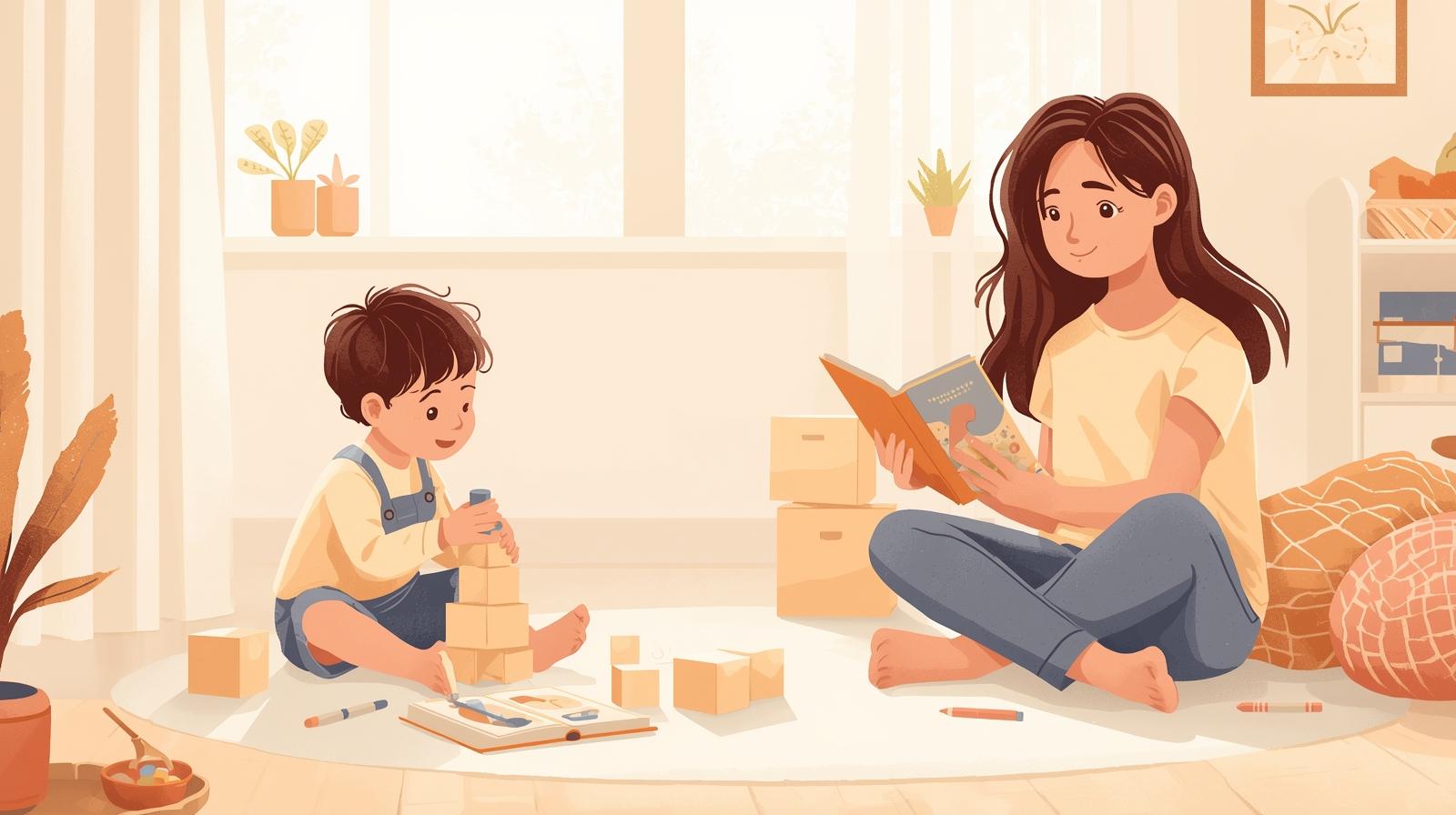
Creating a learning routine for toddlers doesn’t mean strict schedules or early academics. This guide helps parents of children under 3 years learn how to create a learning routine for toddlers without pressure, using play, connection, and everyday moments to support healthy early childhood development—naturally and joyfully.
A gentle beginning: “Am I doing enough?”
If you’re a parent to a toddler, chances are this question pops into your mind often. You may see other children reciting rhymes, identifying colors, or attending multiple classes—and wonder if your child is falling behind.
Take a deep breath. 💛
The truth is, toddlers learn best when they feel safe, relaxed, and loved, not rushed or pushed. A learning routine at this age isn’t about performance—it’s about predictability, warmth, and meaningful moments.
What does a “pressure-free learning routine” really mean?
For children under 3, learning is happening all the time—while stacking bowls, listening to your voice, splashing water, or watching birds outside the window.
A pressure-free learning routine:
- Fits naturally into daily life
- Respects your child’s mood, energy, and interests
- Focuses on experiences, not outcomes
Think of it less as a timetable and more as a gentle rhythm to the day.
Why routines actually help toddlers feel secure
Many parents worry that routines might feel restrictive. In reality, simple, flexible routines make toddlers feel emotionally safe. When children know what comes next, their anxiety reduces—and curiosity increases.
Key developmental benefits:
- Emotional development: Predictability builds trust and reduces tantrums
- Cognitive growth: Repeated everyday activities strengthen memory and understanding
- Language skills: Daily conversations and songs enrich vocabulary
- Physical development: Regular movement, play, and self-help tasks build coordination
How to create a learning routine for toddlers without pressure
1. Anchor learning to daily activities
You don’t need “extra time” for teaching. Use what already exists:
- Talk while dressing your child
- Count steps while climbing
- Name fruits while cutting them
These moments are powerful because they’re real and meaningful.
2. Follow your toddler’s lead
Some days your child may want books. Other days—just pots and spoons. Both are learning.
When you follow their interest, you send a strong message: “You are heard.”
Simple rule:
Interest first. Learning follows.
3. Keep routines short and flexible
Toddlers have short attention spans—and that’s normal.
Instead of a long session:
- 5 minutes of singing
- 10 minutes of free play
- A short story before sleep
That’s more than enough.
4. Repeat, but don’t force
Repetition builds learning—but only when it’s joyful.
If your child walks away, it’s okay. Learning hasn’t stopped. It’s just shifted.
5. Build routines around connection, not comparison
Avoid measuring your child against others. Every toddler grows at their own pace.
Your calm presence matters more than any worksheet or class.
Simple routine example (for inspiration, not imitation)
- Morning: Talk and sing during bath time
- Daytime: Free play + outdoor walk
- Evening: Quiet play + story + cuddle
That’s it. No pressure. No race.
A gentle reminder for parents
You are not behind.
Your child is not late.
And learning does not have to be loud or visible to be real.
By creating a loving, pressure-free learning routine, you’re laying the foundation for confidence, curiosity, and lifelong learning—one small moment at a time.
Closing thoughts: small steps, big impact
You don’t need to overhaul your day. Start with one routine, one conversation, one shared smile. These tiny, consistent moments shape your toddler’s early years more than you can imagine.
Trust yourself. You’re doing better than you think. 🌱
Leave a Reply