
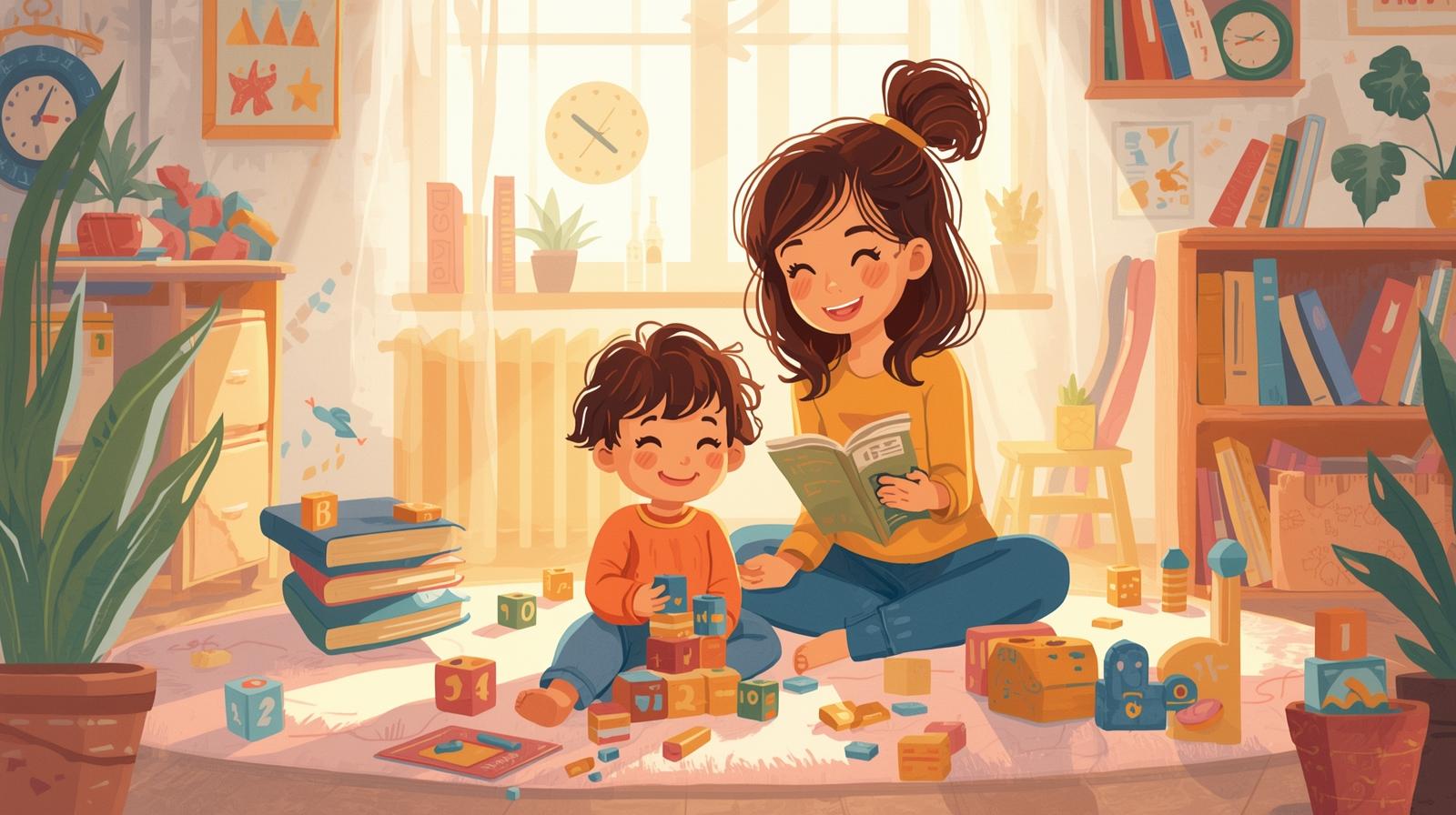
Wondering whether your toddler should be playing more or learning more? You’re not alone. Many parents search for ways to balance play and learning for toddlers—without pressure, guilt, or confusion. The good news is that play is learning in the early years. This guide will help you find a calm, joyful balance that truly supports your child’s development.
“Am I doing enough… or doing too much?”
If your child is under 3, you’ve probably asked yourself this question. Some days feel full of play, other days feel unstructured—and you may worry if learning is happening at all. Take a deep breath. For toddlers, learning doesn’t need to look like teaching.
Understanding the Real Balance Between Play and Learning
For toddlers, play and learning are not two separate things.
- When a child stacks blocks → they learn balance and problem-solving
- When they pretend to cook → they build language and imagination
- When they run, jump, or climb → they develop focus and confidence
Play is the natural language of early learning.
Why Play Is Essential for Toddlers (0–3 Years)
Play supports every area of early childhood development:
- Emotional development: Builds confidence and security
- Cognitive development: Encourages thinking and curiosity
- Physical development: Strengthens muscles and coordination
- Social development: Teaches sharing, turn-taking, and communication
Structured learning without enough play can actually reduce interest and joy.
What Balanced Learning Really Looks Like at Home
A healthy balance means:
- Short moments of guided activity
- Plenty of free, unstructured play
- Everyday routines turned into learning moments
Example:
Naming colours while folding clothes or counting steps while climbing stairs—simple, stress-free learning.
Simple Ways to Balance Play and Learning for Toddlers
1. Follow Your Child’s Interest
If your toddler loves cars, use them to talk about colours, sounds, and movement.
2. Keep Activities Short and Flexible
Toddlers have short attention spans.
5–10 minutes of focused activity is more than enough.
Stop before they lose interest.
3. Turn Daily Routines Into Learning
- Bath time → body parts and vocabulary
- Meal time → textures, names, choices
- Outdoor walks → sounds, nature, movement
Learning doesn’t need extra time—just awareness.
4. Use Minimal, Gentle Learning Tools
If you use books or worksheets:
- Choose simple, colourful, playful ones
- Sit with your child
- Never force completion
5. Allow Free Play Without Guilt
Free play builds independence and creativity.
It’s okay if your child plays alone while you observe quietly.
This is learning too.
Benefits of a Healthy Play–Learning Balance
When play and learning are balanced, children:
- Enjoy discovering new things
- Develop a positive attitude toward learning
- Feel safe, confident, and curious
- Adjust better to nursery and school later
These foundations matter far more than early academics.
A Gentle Reminder for Parents
You don’t need a timetable, fancy toys, or constant activities.
Your presence, patience, and encouragement are enough.
There is no perfect balance—only a responsive one.
Conclusion: Small Moments, Big Impact
Learning doesn’t begin with books—it begins with connection and play. When you balance play and learning for toddlers naturally, you give them the greatest gift: a love for learning that lasts.
Take small steps.
Follow your child’s lead.
Trust that play is doing powerful work. 💛
Leave a Reply