
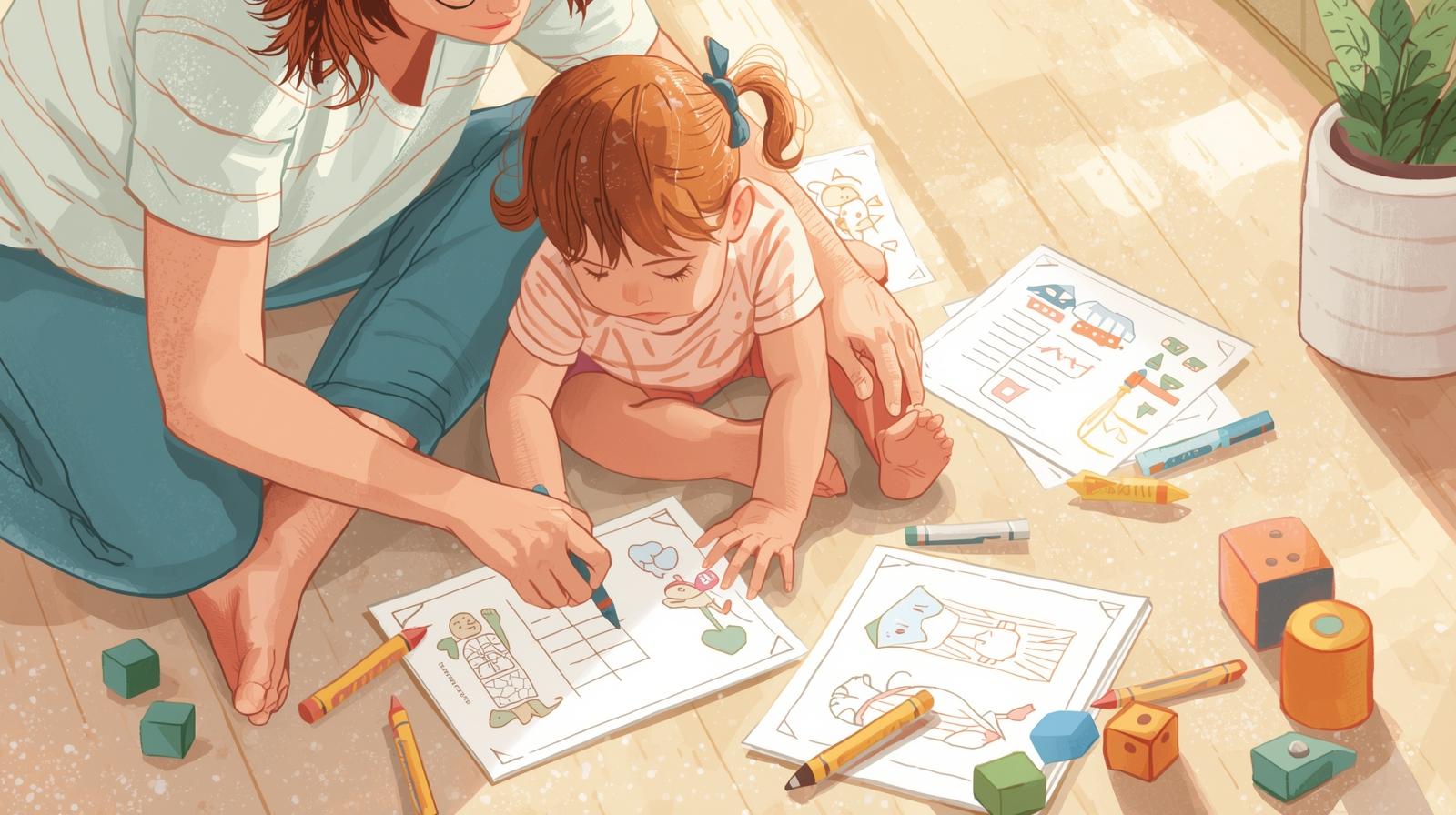
If you’ve ever asked yourself “How many worksheets are enough for toddlers?”, you’re not alone. Parents of children under 3 often feel torn between wanting to support early learning and worrying about pushing too much. This gentle guide will help you find a balanced, pressure-free answer—one that supports development and keeps childhood joyful.
“Some days we do none… some days we try many. Am I doing it wrong?”
It’s a common scene: you print a few worksheets, your toddler scribbles for a minute, then runs off to play. You might wonder if you should insist—or if worksheets are even necessary at this age.
Here’s the reassuring truth: toddlers don’t need many worksheets at all. In fact, less is usually more.
What worksheets really mean for toddlers under 3
For toddlers, worksheets are not meant to teach academics. At this age, worksheets are simply:
- A chance to explore paper and crayons
- A brief fine-motor experience
- A moment of shared interaction with you
They are not meant to test focus, accuracy, or readiness.
So… how many worksheets are enough for toddlers?
For most toddlers under 3, a healthy guideline looks like this:
- 0–2 worksheets in one sitting
- 1–2 days per week (not every day)
- 2–5 minutes per session
Some weeks, zero worksheets is completely fine—and often better.
The goal is exposure, not routine.
Why fewer worksheets support better development
Toddlers learn best through:
- Movement
- Play
- Repetition
- Exploration
Too many worksheets can:
- Reduce interest in learning
- Create frustration
- Limit movement and creativity
A small amount keeps learning positive and voluntary.
Benefits of using a small number of worksheets
When worksheets are limited and gentle, they can support:
- Fine motor development: Scribbling, holding crayons
- Cognitive development: Matching, noticing pictures
- Emotional development: Confidence from trying something new
- Routine familiarity: Brief sitting with support
Signs your toddler has had enough worksheets
Your child may be saying “I’m done” when they:
- Get up and walk away
- Start tearing the paper
- Lose interest or focus
- Look frustrated
These are healthy signals. Respecting them builds trust.
What to do instead of adding more worksheets
If you feel tempted to add one more sheet, try these instead:
1. Switch to play
Blocks, stacking cups, pretend play, or puzzles support deeper learning.
2. Use fine motor play
Playdough, pouring, tearing paper, or finger painting strengthen hands naturally.
3. Talk, read, or sing together
Language grows faster through conversation and shared stories than through paper tasks.
How to use worksheets wisely (when you do use them)
- Choose one simple worksheet
- Sit with your child
- Allow scribbling anywhere
- Avoid correction or expectations
- Stop early, not late
Ending on a positive note keeps curiosity alive.
What parents don’t need to worry about
You can gently let go of these fears:
- ❌ “My child isn’t doing enough worksheets”
- ❌ “Other toddlers are doing more”
- ❌ “Nursery schools expect this”
Most nursery schools value comfort, independence, and curiosity—not worksheet counts.
A gentle reassurance for parents
If your toddler is active, curious, playful, and emotionally secure, they are learning exactly as they should. Worksheets do not measure intelligence or readiness. Your attention, patience, and connection matter far more than the number of pages completed.
You are not behind—you are thoughtful.
Conclusion: fewer sheets, happier learning
So, how many worksheets are enough for toddlers?
Just enough to spark curiosity—never so many that learning feels like a task.
One simple sheet.
A few happy minutes.
Then back to play.
Those small, pressure-free choices are building confidence, joy, and a love for learning that will last far beyond nursery. 🌱
Leave a Reply