
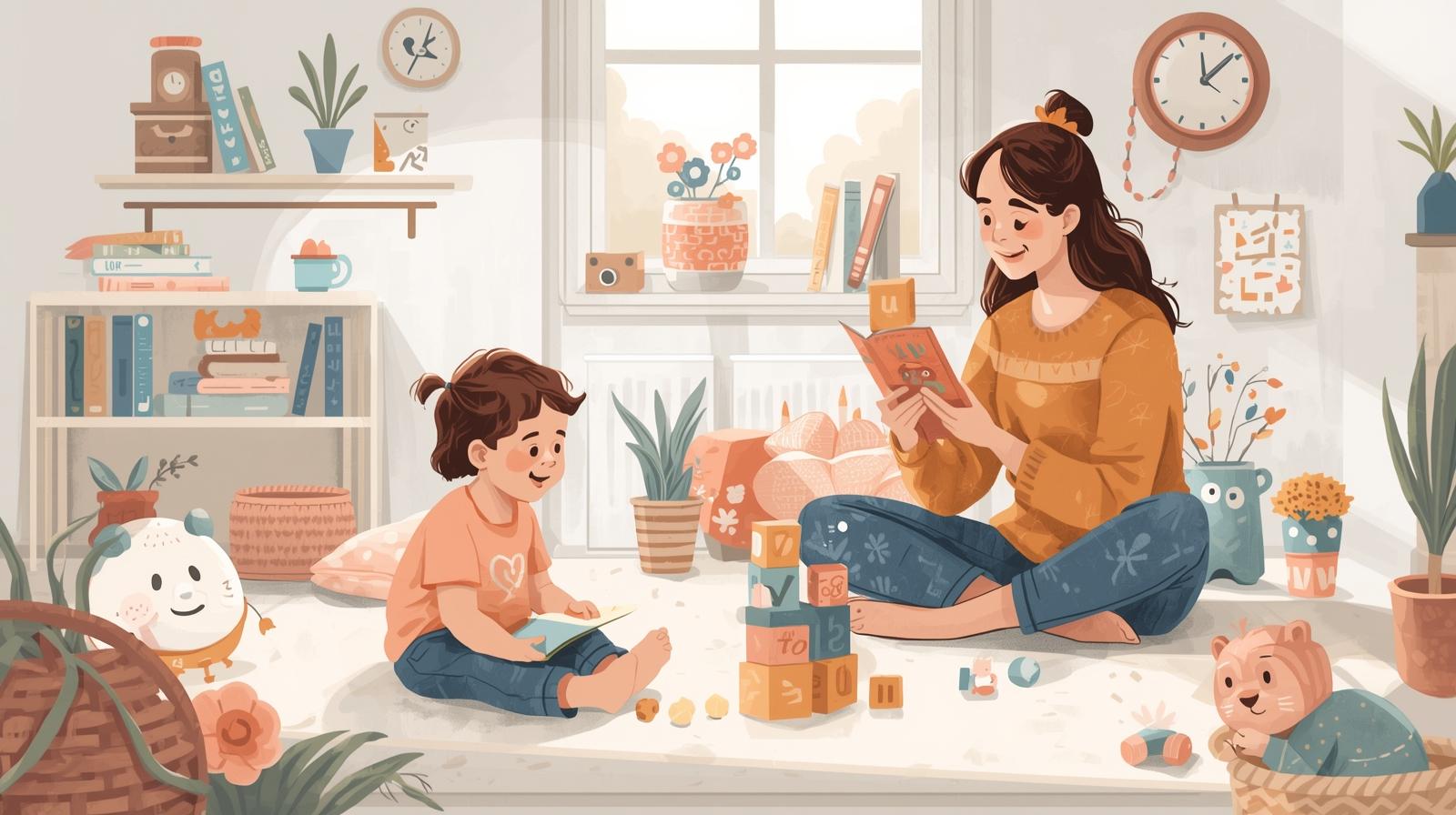
If you’re wondering how long toddlers should spend on learning activities, you’re not alone. Many parents worry about doing too little—or too much. This guide helps parents of children under 3 understand what’s developmentally healthy, reassuring you that short, joyful learning moments matter far more than long, structured sessions.
“Am I spending enough time teaching my toddler?”
This question quietly troubles many parents, especially first-time ones. You might see activity charts online or hear about toddlers attending multiple classes—and start worrying if your child needs more “learning time.”
Here’s a gentle truth to hold onto: toddlers don’t learn by the clock. They learn through curiosity, play, movement, and connection. And at this age, less truly is more.
What counts as a “learning activity” for toddlers?
Before we talk about time, let’s redefine learning.
For children below 3, learning activities include:
- Talking and listening
- Free play and exploration
- Singing, reading, and storytelling
- Simple routines like eating and tidying up
- Movement and outdoor play
Learning is woven into the day—it’s not a separate “study time.”
How long should toddlers spend on learning activities?
The short answer: very little at a time
Toddlers have naturally short attention spans—and that’s healthy.
Here’s a realistic guideline:
- 1–2 years: 2–5 minutes per activity
- 2–3 years: 5–10 minutes per activity
And that’s it.
Several short activities spread across the day are far more effective than one long session.
Why shorter learning time is actually better
1. Supports healthy brain development
Toddlers’ brains grow best with frequent breaks. Short activities prevent overload and frustration.
2. Builds positive feelings toward learning
When learning stops before boredom, children associate learning with joy—not pressure.
3. Respects emotional and physical needs
Toddlers need movement, rest, and comfort just as much as stimulation.
Real-life example parents relate to
If your toddler looks away, runs off, or starts throwing things after a few minutes—it’s not misbehavior. It’s their way of saying, “I’m done for now.”
Stopping at that moment protects curiosity instead of forcing compliance.
What matters more than duration
✔ Quality over quantity
Five minutes of focused, happy interaction is better than 30 minutes of distracted teaching.
✔ Repetition over length
Repeating the same activity on different days builds learning naturally.
✔ Connection over completion
Your presence, tone, and patience matter more than finishing an activity.
How to include learning without watching the clock
Use daily routines
Talk during meals, baths, and dressing—no extra time needed.
Follow your child’s lead
If your child shows interest, stay. If not, move on guilt-free.
Spread learning across the day
A song here, a book there, a conversation during play—it all adds up.
Signs your toddler has had enough learning time
It’s time to stop when you notice:
- Turning away or walking off
- Fussiness or irritability
- Throwing materials
- Loss of interest
Stopping early keeps learning positive.
What toddlers don’t need
Let go of these pressures:
- ❌ Long sitting sessions
- ❌ Timers and schedules
- ❌ Worksheets or drills
- ❌ Comparison with other children
Toddlers grow at different speeds—and that’s exactly how it should be.
A gentle reassurance for parents
You are not behind.
You are not under-teaching.
And you are not failing your child.
If you talk, play, cuddle, and respond to your toddler—you are already supporting their learning in the best possible way.
Conclusion: small moments, powerful learning
When asking how long toddlers should spend on learning activities, remember this: learning doesn’t need more time—it needs the right kind of time.
Short.
Playful.
Repeated.
And filled with warmth.
Trust your child’s rhythm. Trust your instincts. Those small, joyful moments you share every day are shaping a confident, curious learner for life. 🌱
Leave a Reply