
A gentle, science-backed guide for parents of children under 3
If you’ve ever wondered whether your toddler is “learning enough,” you’re not alone. The good news? Learning through play is one of the most powerful ways to support brain development in toddlers—and it’s already happening in your home every day.
A Loving Reassurance for Parents Who Worry
As parents, especially first-time parents, it’s natural to worry:
Should my toddler know more words by now? Am I doing enough? Do I need special toys or classes?
Here’s something comforting and true: your toddler’s brain grows best through simple, playful moments with you. Not worksheets. Not pressure. Just play—curious, messy, joyful play.
When toddlers play, their brains are forming millions of connections that shape how they think, feel, move, and relate to others. And the best part? You don’t need to be an expert. You’re already your child’s favorite teacher. 💛
What Does “Learning Through Play” Really Mean?
Learning through play doesn’t mean structured lessons. It means everyday moments that spark curiosity.
Think about when your toddler:
- Drops a spoon repeatedly from the high chair
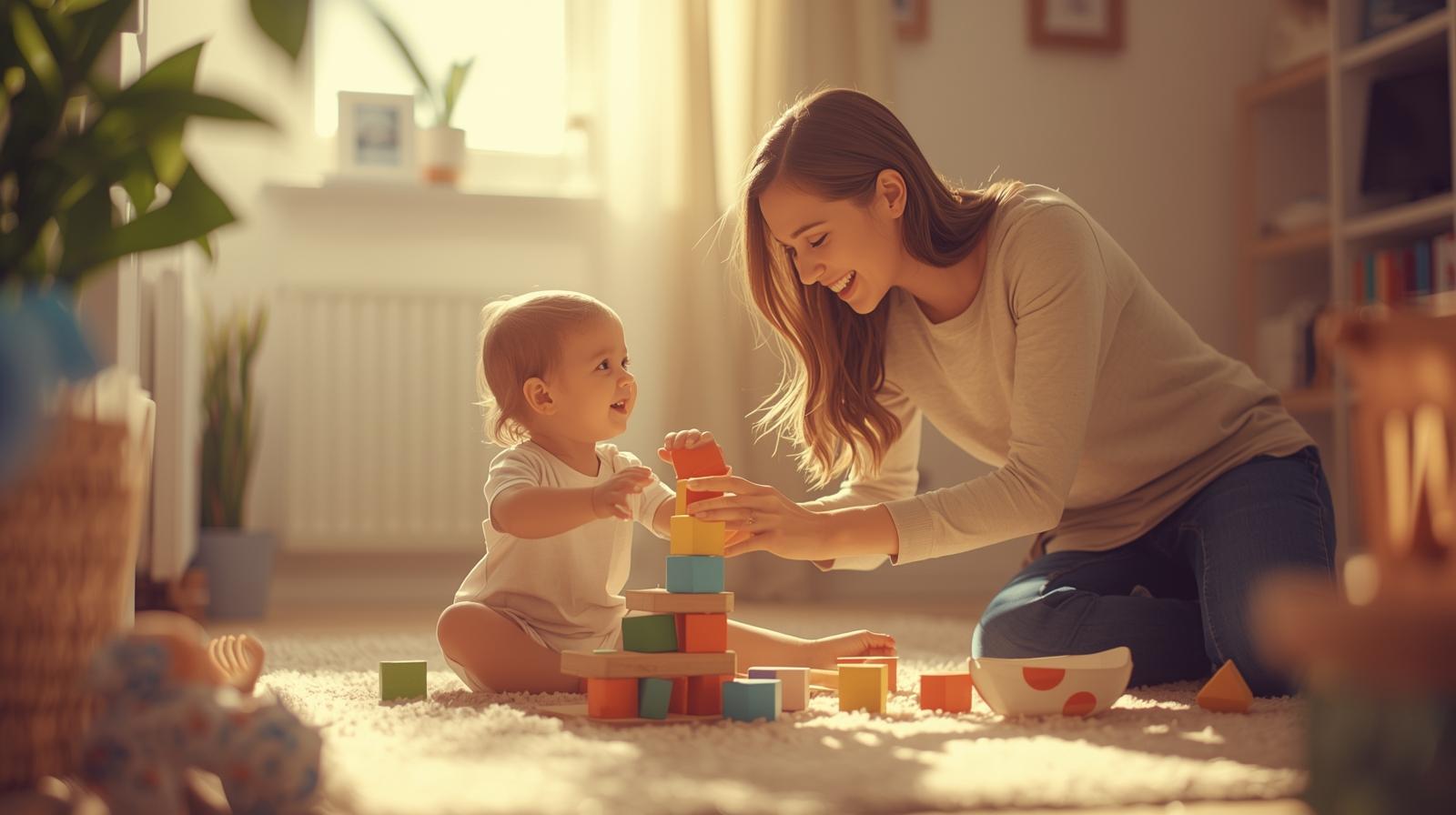
- Stacks blocks, knocks them down, and laughs
- Pretends to talk on a toy phone
- Runs, climbs, and explores every corner
These playful actions are building brain pathways that support memory, problem-solving, language, and emotional regulation.
How Play Supports Brain Development in Toddlers
🧠 Cognitive Growth (Thinking & Learning)
When toddlers play, they experiment with cause and effect.
What happens if I push this? What if I try again?
Simple games like stacking cups or fitting shapes help develop:
- Problem-solving skills
- Early math concepts (size, order, patterns)
- Memory and attention span
Play gives toddlers the freedom to learn at their own pace, which is crucial for healthy brain development.
❤️ Emotional Development (Feelings & Security)
Play is also how toddlers express emotions they can’t yet explain with words.
When you join their play:
- They feel seen and understood
- They build emotional security
- They learn how to manage frustration and joy
Your presence during play sends a powerful message: “You are safe. You are loved.”
🗣️ Language & Social Skills
Talking, singing, and even silly sounds during play help toddlers develop language naturally.
Narrating play—“You’re rolling the ball!” or “The car is fast!”—supports:
- Vocabulary growth
- Listening skills
- Early communication
When toddlers play with parents or caregivers, they also learn turn-taking, sharing, and social cues.
🤸 Physical Development (Movement & Coordination)
Crawling, walking, climbing, and dancing aren’t just physical milestones—they’re brain-building activities.
Movement strengthens the connection between the body and brain, improving:
- Balance and coordination
- Spatial awareness
- Confidence in exploring the world
Simple Ways Parents Can Encourage Learning Through Play (Starting Today)
You don’t need fancy toys. Here are easy, loving ways to support your toddler’s brain development at home:
- Follow your child’s lead – Let them choose the game
- Talk during play – Describe what you see and do
- Repeat favorite activities – Repetition strengthens learning
- Limit distractions – Even 10 minutes of focused play matters
- Use everyday items – Pots, boxes, scarves, and spoons are wonderful tools
Remember: your attention is more valuable than any toy.
A Gentle Reminder (You’re Doing Better Than You Think)
Some days are exhausting. Some playtimes are short. And that’s okay.
Learning through play isn’t about being perfect—it’s about being present. Small, loving moments add up to a strong, healthy foundation for your toddler’s future.
A Hopeful Ending for Every Parent
Every giggle, every game, every shared moment is shaping your toddler’s growing brain. By embracing play, you’re not just helping them learn—you’re helping them feel confident, curious, and connected.
Take it one playful moment at a time. Your love, patience, and presence are already making a beautiful difference. 🌱
Because when toddlers learn through play, their brains—and hearts—grow strong.
Leave a Reply