
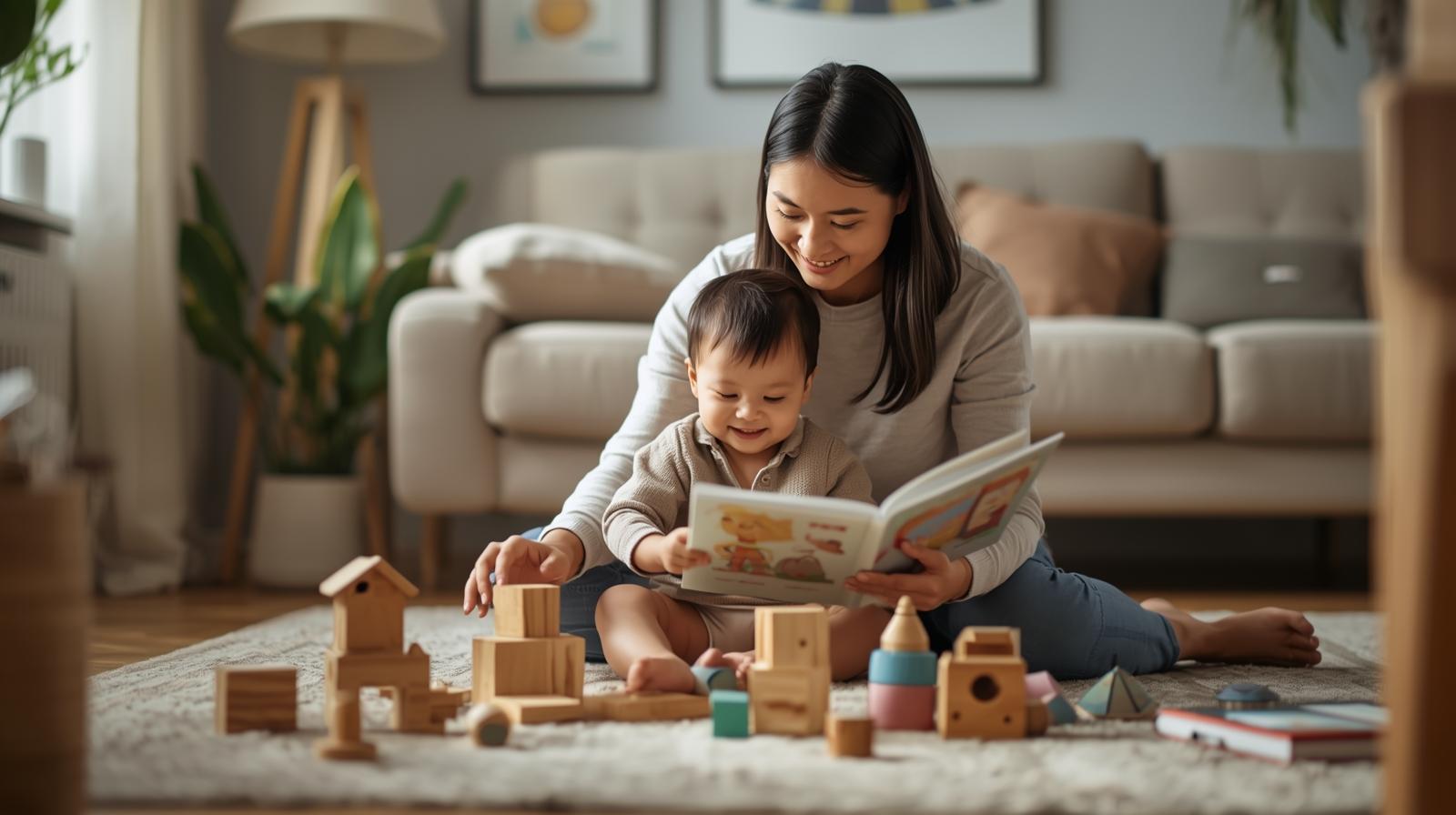
If you’re a parent of a toddler under 3, you may be wondering whether play-based learning or formal education is better for your child’s early development. This guide explains the difference between play-based learning and formal education for toddlers, helping you make confident, informed choices that support your child’s emotional, cognitive, and social growth.
Introduction: “Am I Doing Enough for My Toddler?”
If you’ve ever watched your toddler stack blocks, babble to a stuffed toy, or run joyfully around the house and wondered, “Should they be learning more?”—you’re not alone.
Many first-time parents worry about giving their child the “right start.” With so much talk about early education, worksheets, and classes, it’s natural to feel torn between play-based learning and formal education for toddlers.
Here’s the reassuring truth: learning doesn’t have to look like school—especially before age 3. Let’s gently explore the difference, so you can choose what truly supports your child’s healthy development.
What Is Play-Based Learning for Toddlers?
Play-based learning is exactly what it sounds like—children learn through everyday play experiences that feel natural and enjoyable.
For toddlers under 3, this might look like:
- Pretending to feed a doll
- Pouring water between cups during bath time
- Singing songs with actions
- Exploring textures, sounds, and movement
Through play, toddlers learn language, problem-solving, emotional regulation, and social skills—all without pressure.
What Is Formal Education for Toddlers?
Formal education is more structured and adult-led. It often includes:
- Set lessons or activities
- Sitting for short periods
- Learning letters, numbers, or colors in a planned way
While formal education has value later, toddlers’ brains are still developing the foundations needed for structured learning—such as attention span, emotional security, and physical coordination.
For children under 3, too much structure can sometimes feel overwhelming rather than helpful.
Key Difference Between Play-Based Learning and Formal Education for Toddlers
🧸 Learning Style
- Play-Based Learning: Child-led, flexible, and curiosity-driven
- Formal Education: Adult-led, structured, and goal-oriented
💛 Emotional Experience
- Play-Based Learning: Joyful, safe, and pressure-free
- Formal Education: Can feel demanding if introduced too early
🧠 Brain Development
- Play-Based Learning: Builds neural connections through exploration
- Formal Education: Focuses on outcomes rather than process
In simple terms, play-based learning meets toddlers where they are, while formal education is better suited for later stages.
Why Play-Based Learning Is So Powerful Before Age 3
Play supports whole-child development, especially in the early years.
Emotional Development
Through play, toddlers learn to:
- Express feelings
- Build confidence
- Feel secure and understood
Cognitive Growth
Simple play activities build:
- Memory and attention
- Early problem-solving skills
- Language and communication
Physical & Social Skills
Running, climbing, stacking, and sharing help toddlers:
- Strengthen muscles and coordination
- Learn turn-taking and social cues
Simple Play-Based Learning Ideas You Can Try Today
You don’t need fancy toys or classes. Small, intentional moments matter most.
- Talk through daily routines (“Now we’re washing hands!”)
- Let your toddler explore safe household items (spoons, boxes, scarves)
- Read picture books and name what you see
- Sing songs with clapping or movement
- Follow your child’s lead—join their play without directing it
These everyday moments are powerful learning opportunities.
A Gentle Reassurance for Parents
If your toddler isn’t reciting alphabets or counting to ten yet—that’s okay.
You’re not falling behind. You’re not missing a window. By choosing play, connection, and responsiveness, you’re giving your child exactly what their developing brain needs.
Formal education will come in time. For now, love, play, and presence are enough.
Conclusion: Small Steps, Lifelong Impact
Understanding the difference between play-based learning and formal education for toddlers helps you make choices rooted in confidence, not fear.
You don’t need to do more—you just need to stay connected. Through simple play, warm interaction, and everyday curiosity, you’re shaping your child’s future in meaningful ways.
Take it one moment at a time. You’re doing better than you think—and your toddler is learning every single day. 💛
Leave a Reply