
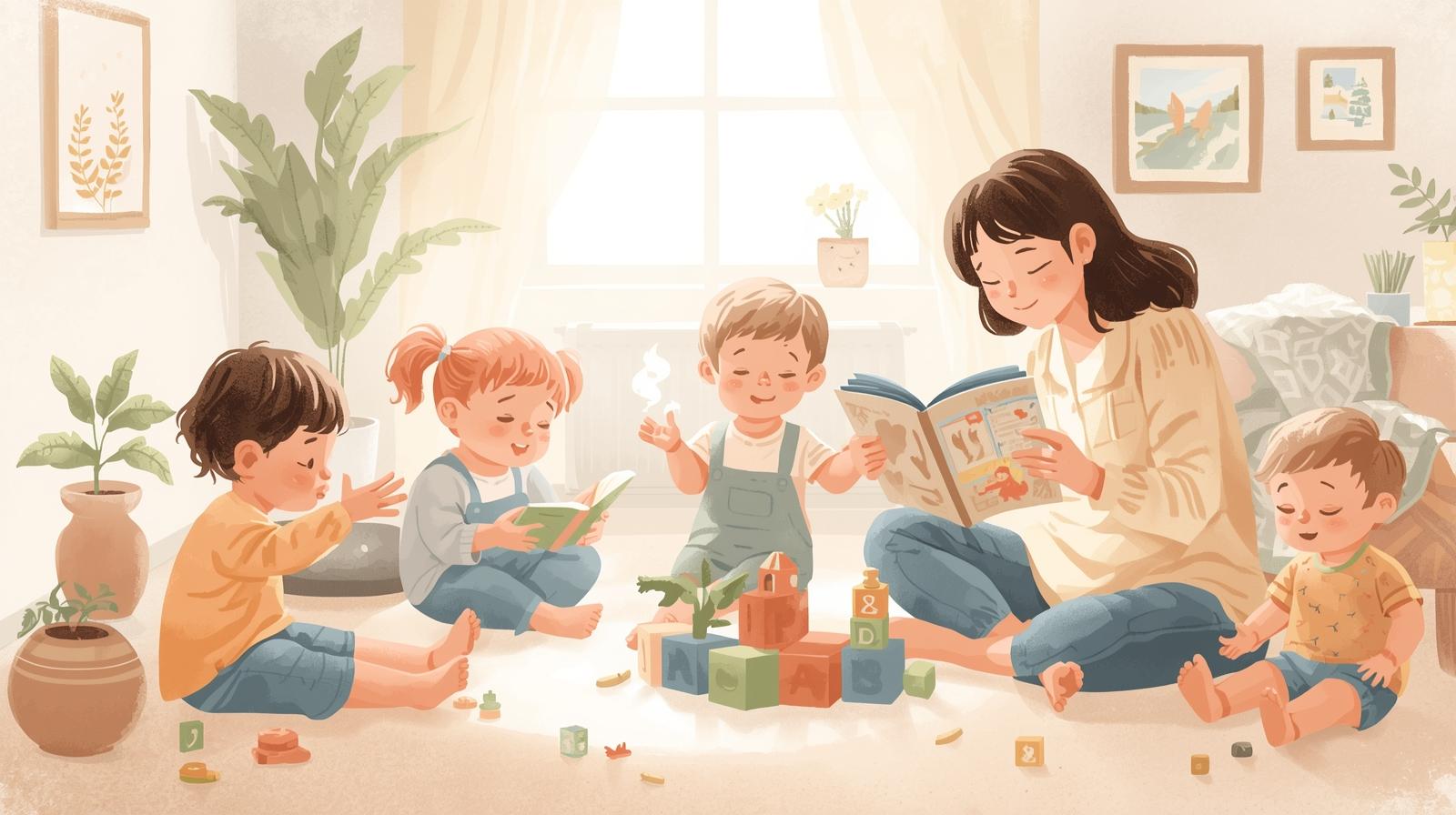
Creating a daily learning routine for kids below 3 years doesn’t mean strict schedules or formal teaching. This guide helps parents build a gentle, flexible routine using everyday moments—so toddlers learn naturally through play, connection, and consistency, without pressure or guilt.
“I want a routine… but I don’t want to overdo it.”
If you’re a parent of a child under 3, this thought probably sounds familiar. You want to support your child’s learning, but you also want them to enjoy their day—and for you to breathe too.
Here’s the reassuring truth: a daily learning routine at this age is about rhythm, not rigidity. When learning is woven into daily life, children feel safe, curious, and confident—and parents feel calmer too.
What does a daily learning routine really mean for toddlers?
For kids below 3 years, learning routines are not about lessons. They are about predictable, loving patterns that repeat each day.
A healthy routine includes:
- Talking and listening
- Free play and movement
- Calm moments and rest
- Small chances for independence
Why a daily learning routine helps early childhood development
A simple daily routine supports:
- Emotional development: Predictability builds security
- Cognitive development: Repetition strengthens understanding
- Physical development: Daily movement improves coordination
- Social development: Interaction builds communication skills
Children thrive when they know what comes next—even loosely.
A gentle daily learning routine for kids below 3 years
Morning: connection and conversation
Mornings set the tone for the day.
Simple learning moments:
- Talk while getting dressed
- Name objects during breakfast
- Sing a song or rhyme
Why it helps:
Builds language skills and emotional bonding.
Mid-morning: play and movement
This is when toddlers have the most energy.
Learning through play:
- Free floor play with blocks or cups
- Crawling, walking, or climbing safely
- Rolling or throwing a soft ball
Why it helps:
Supports physical strength, coordination, and curiosity.
Late morning: focused but short activities
Toddlers can focus briefly—when they’re interested.
Try:
- Looking at picture books
- Simple sorting or stacking
- Singing action rhymes
Keep this to 5–10 minutes.
Afternoon: rest and quiet time
Rest is part of learning.
Include:
- Nap time
- Quiet cuddles
- Soft music or storytelling
Why it helps:
The brain grows during rest just as much as during activity.
Evening: independence and routine
Evenings are perfect for life skills.
Learning moments:
- Let your child help put toys away
- Encourage self-feeding
- Talk about the day
Bedtime: calm connection
End the day gently.
Bedtime routine ideas:
- Bath time with conversation
- A short story
- A cuddle and predictable goodnight
Why it helps:
Creates emotional safety and better sleep patterns.
Tips to keep the routine realistic and stress-free
- Be flexible—some days won’t go as planned
- Follow your child’s energy
- Repeat activities rather than adding new ones
- Consistency matters more than perfection
What a daily learning routine does not need
Gently release these pressures:
- ❌ Strict timetables
- ❌ Worksheets or drills
- ❌ Long sitting sessions
- ❌ Comparing routines with others
Toddlers learn best when life feels safe and joyful.
A gentle reassurance for parents
If some days feel chaotic or unproductive, remember this: learning is happening even when it’s invisible. Every conversation, cuddle, and shared smile is shaping your child’s brain.
You don’t need to do more. You’re already doing enough.
Conclusion: small routines, strong foundations
A daily learning routine for kids below 3 years isn’t about filling the day—it’s about creating a loving flow your child can trust.
Start with one part of the day.
Keep it simple.
Repeat with warmth.
These small, meaningful routines are quietly building confidence, curiosity, and a strong foundation for your child’s future. 🌱
Leave a Reply