
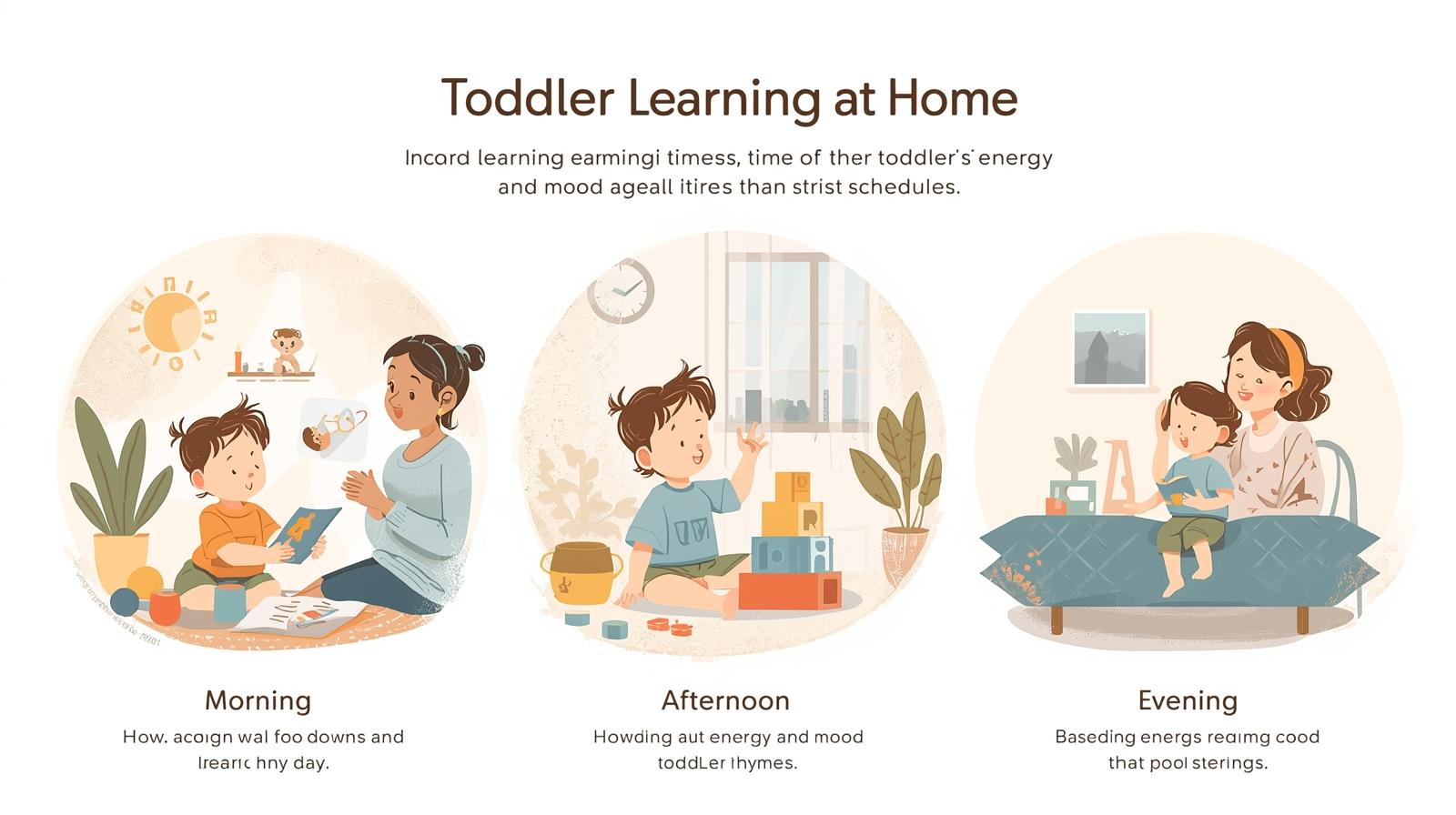
Wondering about the best time of day to teach toddlers without meltdowns or resistance? This guide helps parents of children under 3 understand how toddlers’ energy, mood, and natural rhythms affect learning—so you can choose moments that feel calm, joyful, and effective, not forced.
“My toddler learns sometimes… and refuses at other times. Why?”
If you’ve ever tried to read a book only to have it tossed aside—or planned a “learning moment” that ended in tears—you’re not alone. Many parents worry they’re choosing the wrong time to teach.
Here’s the reassuring truth: there is no single perfect time of day for all toddlers. The best time depends on your child’s energy, comfort, and emotional state—not the clock.
What “teaching” really means for toddlers under 3
Before we talk about timing, let’s redefine teaching.
For toddlers, teaching is:
- Talking and listening
- Playing together
- Exploring objects
- Singing, reading, and moving
It’s not lessons or sitting still—it’s shared experiences.
Why timing matters for toddler learning
Toddlers are deeply affected by:
- Sleep quality
- Hunger
- Physical energy
- Emotional comfort
Choosing the right time helps:
- Reduce frustration and resistance
- Improve focus (even if brief)
- Build positive feelings toward learning
When learning fits their rhythm, toddlers engage naturally.
Best times of day to teach toddlers (and why they work)
Morning: calm and receptive
For many toddlers, mornings—after waking up and breakfast—are the most relaxed.
Why mornings work well:
- Energy is fresh
- Mood is calmer
- Less overstimulation
Best for:
- Reading picture books
- Singing songs
- Talking during routines
Mid-morning: active learning through play
This is often a high-energy window.
Why it works:
- Toddlers are alert
- Bodies want to move
Best for:
- Action songs
- Building blocks
- Sorting or stacking
- Outdoor play
Movement-based learning is especially effective here.
After nap: gentle re-engagement
Post-nap time can be a second good learning window—if your child wakes up well-rested.
Best for:
- Short games
- Conversation
- Simple activities
Start slow. If your child seems groggy or clingy, focus on comfort first.
Evening: connection, not instruction
Evenings are usually the least effective time for new learning.
Why evenings are tricky:
- Toddlers are tired
- Emotional regulation is harder
- Overstimulation builds up
Best for:
- Storytime
- Singing
- Talking about the day
- Cuddling and calming routines
This supports emotional development more than cognitive learning.
Signs it’s a good time to teach your toddler
Instead of watching the clock, watch your child.
Good learning moments look like:
- Eye contact
- Curiosity
- Calm energy
- Willingness to engage
If these aren’t present, it’s okay to pause.
Signs it’s not the right time
Stop or shift gears if you see:
- Fussiness or crying
- Turning away
- Throwing objects
- Restlessness
Stopping early keeps learning positive.
Practical tips for choosing the best time of day
- Teach after basic needs are met (sleep, food, comfort)
- Keep activities short (5–10 minutes max)
- Repeat activities at the same time daily if possible
- Follow interest, not schedules
- Be flexible—some days will be different
A gentle reassurance for parents
If learning doesn’t happen when you planned, nothing is wrong. Toddlers are not machines—they’re growing humans with changing needs.
Your responsiveness matters more than perfect timing.
Conclusion: the best time is when your child is ready
When thinking about the best time of day to teach toddlers, remember this: the best time isn’t written on a clock—it shows up in your child’s mood, energy, and connection with you.
Look for calm moments.
Follow your child’s cues.
Keep learning light and loving.
Those small, well-timed moments—filled with warmth and patience—are shaping your toddler’s confidence and love for learning, one day at a time. 🌱
Leave a Reply