
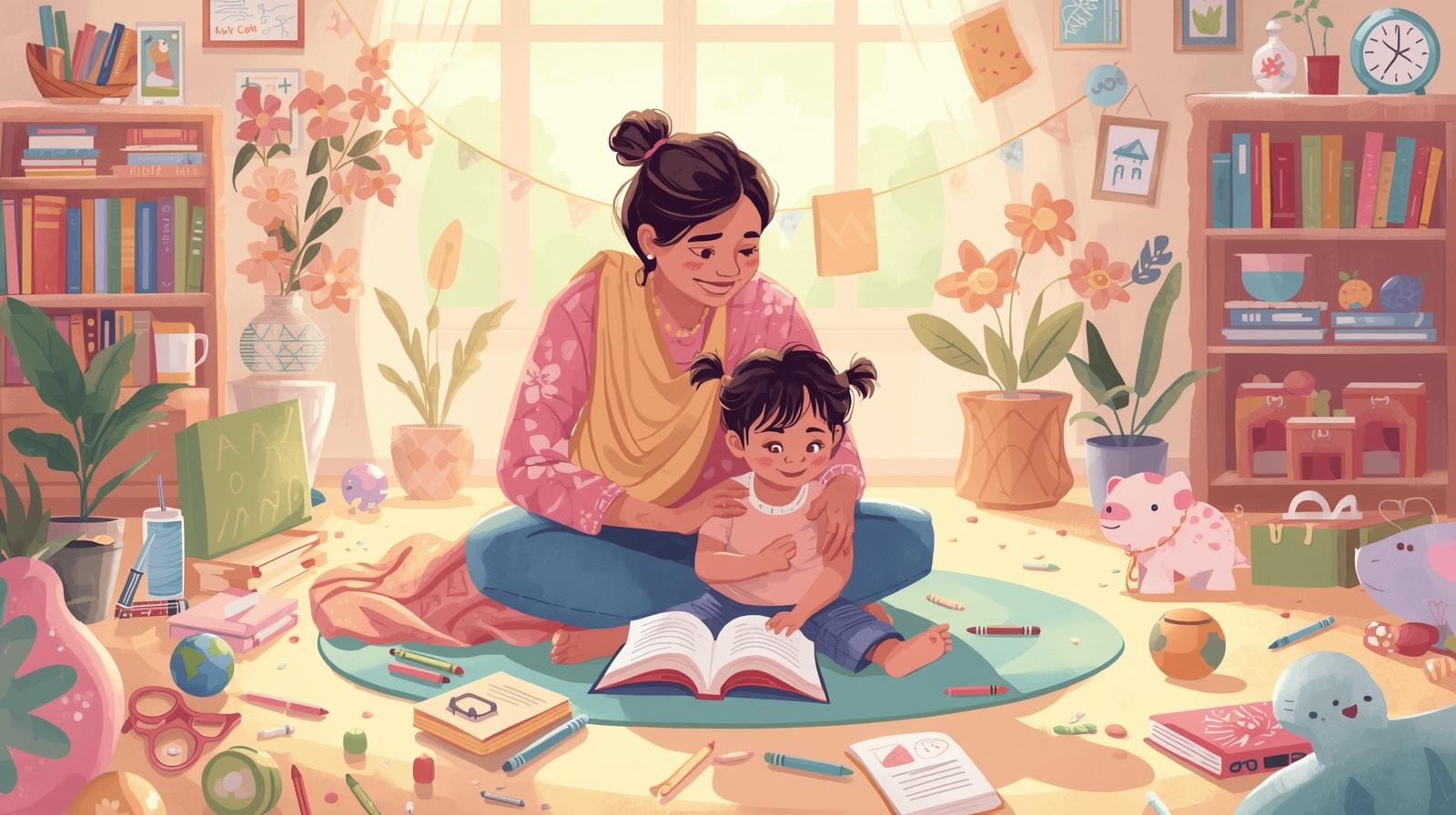
Looking for affordable learning resources for toddlers in India that actually help your child grow—without stretching your budget? If your little one is under 3 and you’re wondering whether learning always needs costly toys or classes, this guide will gently reassure you: meaningful early learning can happen with simple, low-cost resources right at home.
“I want to support learning—but I can’t buy everything I see online.”
You’re not alone. Many Indian parents feel pressure when they see expensive toys, flashcards, and learning kits everywhere. It’s easy to worry: “Am I doing less because I’m spending less?”
Here’s the truth: toddlers don’t need expensive resources to learn well. What they need most is your time, attention, and everyday experiences.
What learning looks like for toddlers under 3
At this age, learning is not about formal teaching. It happens through:
- Talking and listening
- Touching and exploring
- Moving and playing
- Feeling emotionally safe
Affordable resources work beautifully when they support these natural behaviours.
Affordable learning resources Indian parents can rely on
1) Household items (the best free resource)
Why they work: Familiar objects spark curiosity and problem-solving.
Examples:
- Steel bowls and spoons for stacking
- Containers for filling and emptying
- Lids to sort by size
These everyday items build thinking and motor skills.
2) Picture books (borrow or buy used)
Why they matter: Support language, attention, and bonding.
Affordable tips:
- Use local libraries
- Borrow from friends or cousins
- Buy second-hand books
Even one or two books read repeatedly are enough.
3) Crayons and plain paper
Why they help: Strengthen fine motor skills and creativity.
You don’t need fancy activity books.
- Thick crayons
- Old notebooks
- Newspaper space for scribbling
Let your child explore freely.
4) Simple toys that grow with your child
Look for:
- Blocks
- Balls
- Shape sorters
These toys can be used in many ways over time, making them cost-effective.
5) Songs, rhymes, and stories (completely free)
Why they work: Build language, memory, and listening skills.
Use:
- Indian rhymes
- Family songs
- Storytelling from daily life
Your voice is a powerful learning tool.
6) Everyday routines as learning moments
Affordable and effective:
- Counting steps while walking
- Naming fruits during meals
- Talking about colours while dressing
No extra materials needed.
7) Free or printable worksheets (used gently)
If you choose worksheets:
- Use free printables
- Limit to 1 page occasionally
- Focus on scribbling or matching
Worksheets should support learning—not replace play.
Benefits of using affordable learning resources
Low-cost resources support:
- Emotional development: Security and confidence
- Cognitive development: Curiosity and thinking
- Physical development: Coordination and strength
- Social development: Communication and bonding
All without financial stress.
Practical tips to keep learning affordable
- Rotate toys instead of buying new ones
- Choose quality over quantity
- Follow your child’s interests
- Avoid comparison with others
- Remember: attention matters more than tools
A gentle reassurance for parents
Your child will not learn more because a toy is expensive. They learn more when they feel safe, engaged, and connected. Affordable resources, used with love and consistency, are more than enough.
You are not falling behind. You are parenting wisely.
Conclusion: learning doesn’t have to be costly
Affordable learning resources for toddlers in India are all around you—in your kitchen, your stories, your routines, and your time together.
Start small.
Use what you have.
Enjoy the moments.
These simple, meaningful choices today are quietly shaping confident, curious learners for tomorrow—without pressure on your child or your pocket. 🌱
Leave a Reply