
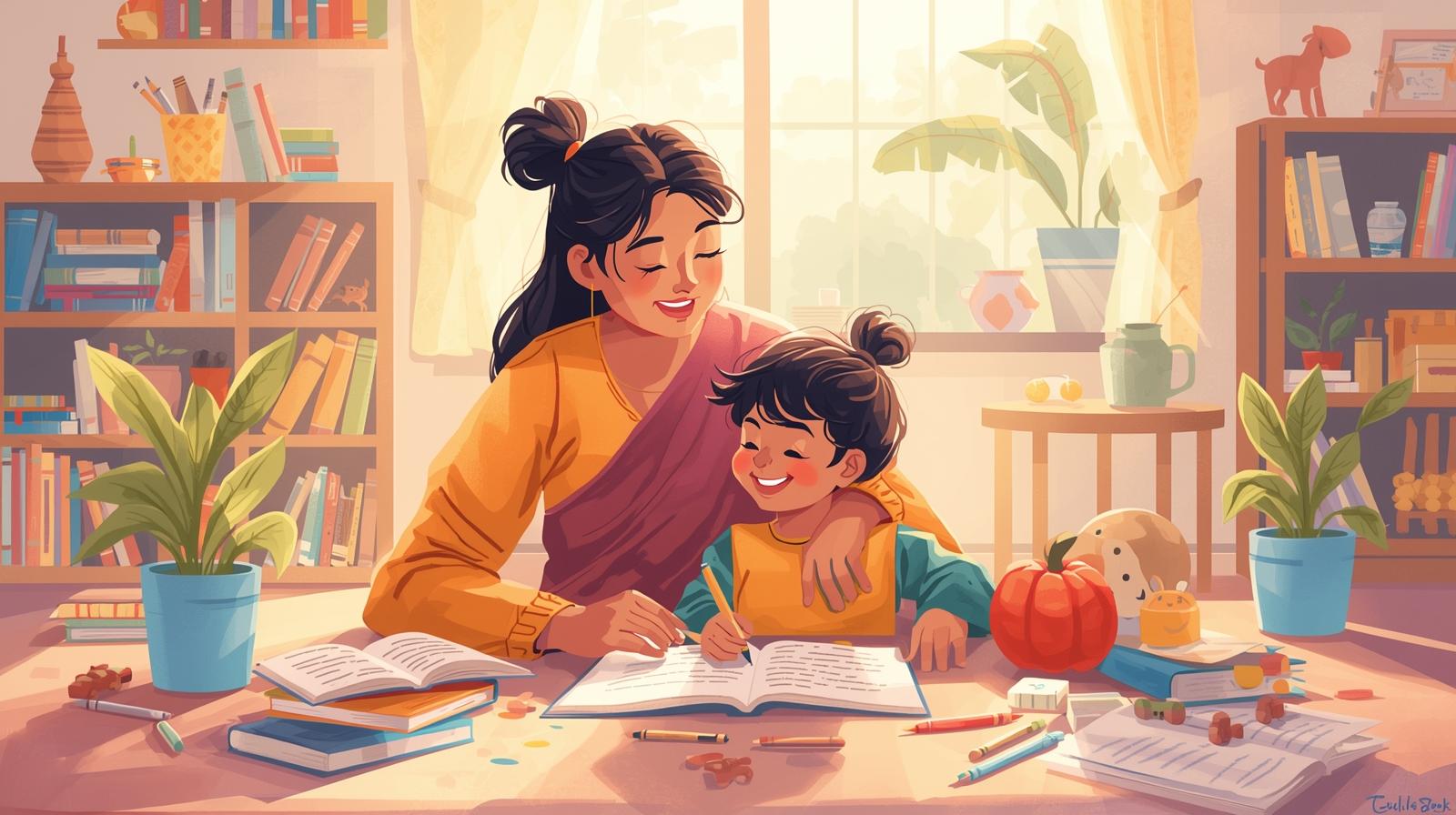
Looking for home learning ideas for Indian parents with toddlers that feel natural, joyful, and pressure-free? If your child is under 3 and you want to support early development without formal teaching, this guide shares simple, everyday ideas that fit beautifully into Indian homes—no expensive toys, no strict schedules, just meaningful moments of learning through love and play.
“I want my child to learn… but I don’t want to rush childhood.”
Many Indian parents feel this exact conflict. You may wonder if you’re doing enough—or too little—especially when everyone around you has advice. The truth is reassuring: toddlers learn best through everyday experiences, not formal lessons.
Home learning at this age is about connection, curiosity, and confidence.
What home learning really means for toddlers (0–3 years)
For children under 3, learning is not sitting at a table or finishing tasks. It looks like:
- Talking and listening
- Exploring objects
- Moving freely
- Playing pretend
- Feeling emotionally safe
Simple home learning ideas Indian parents can try today
1) Talk through daily routines
Why it helps: Builds language and listening skills.
How to do it:
- Name vegetables while cooking
- Talk during bath time
- Describe actions while dressing
No extra time needed—just conversation.
2) Learn with household objects
Why it helps: Encourages thinking and problem-solving.
Try:
- Stacking steel bowls
- Sorting lids by size
- Filling and emptying containers
These activities build curiosity and coordination.
3) Read picture books together (even briefly)
Why it helps: Supports language, attention, and bonding.
How to do it:
- Let your child turn pages
- Talk about pictures
- Don’t worry about finishing the book
4) Encourage free movement and play
Why it helps: Strengthens physical and brain development.
Ideas:
- Crawling, walking, climbing safely
- Dancing to music
- Playing ball indoors
Movement is learning.
5) Scribble, draw, and explore paper
Why it helps: Builds fine motor skills and confidence.
Try:
- Thick crayons
- Blank paper
- Scribbling without rules
No tracing or “correct way” needed.
6) Sing rhymes and action songs
Why it helps: Improves memory, listening, and language rhythm.
Use:
- Indian rhymes
- Action songs with claps and movements
It’s joyful learning—no teaching required.
7) Practise small independence skills
Why it helps: Builds confidence and school readiness.
Encourage your child to:
- Eat with a spoon
- Remove shoes
- Put toys away
Celebrate effort, not perfection.
Benefits of home learning for early childhood development
These simple home learning ideas support:
- Emotional development: Security and trust
- Cognitive development: Curiosity and thinking
- Physical development: Coordination and strength
- Social development: Communication and confidence
All within the comfort of home.
Practical tips to keep home learning stress-free
- Follow your child’s interest
- Keep activities short (2–5 minutes)
- Sit with your child when possible
- Skip activities on busy or tired days
- Balance learning with lots of free play
Consistency matters more than quantity.
A gentle reassurance for parents
If your toddler plays, explores, talks, and feels loved—you are already supporting learning. You don’t need a timetable or teaching plan. Your everyday presence is the most powerful learning tool your child has.
You are doing enough.
Conclusion: small moments, big impact
Home learning ideas for Indian parents with toddlers don’t require pressure, worksheets, or perfect routines. They grow from everyday life—talking, playing, moving, and connecting.
Take small steps.
Enjoy the moments.
Trust your child’s pace.
These gentle experiences today are quietly shaping confident, curious learners for tomorrow. 🌱
Leave a Reply