
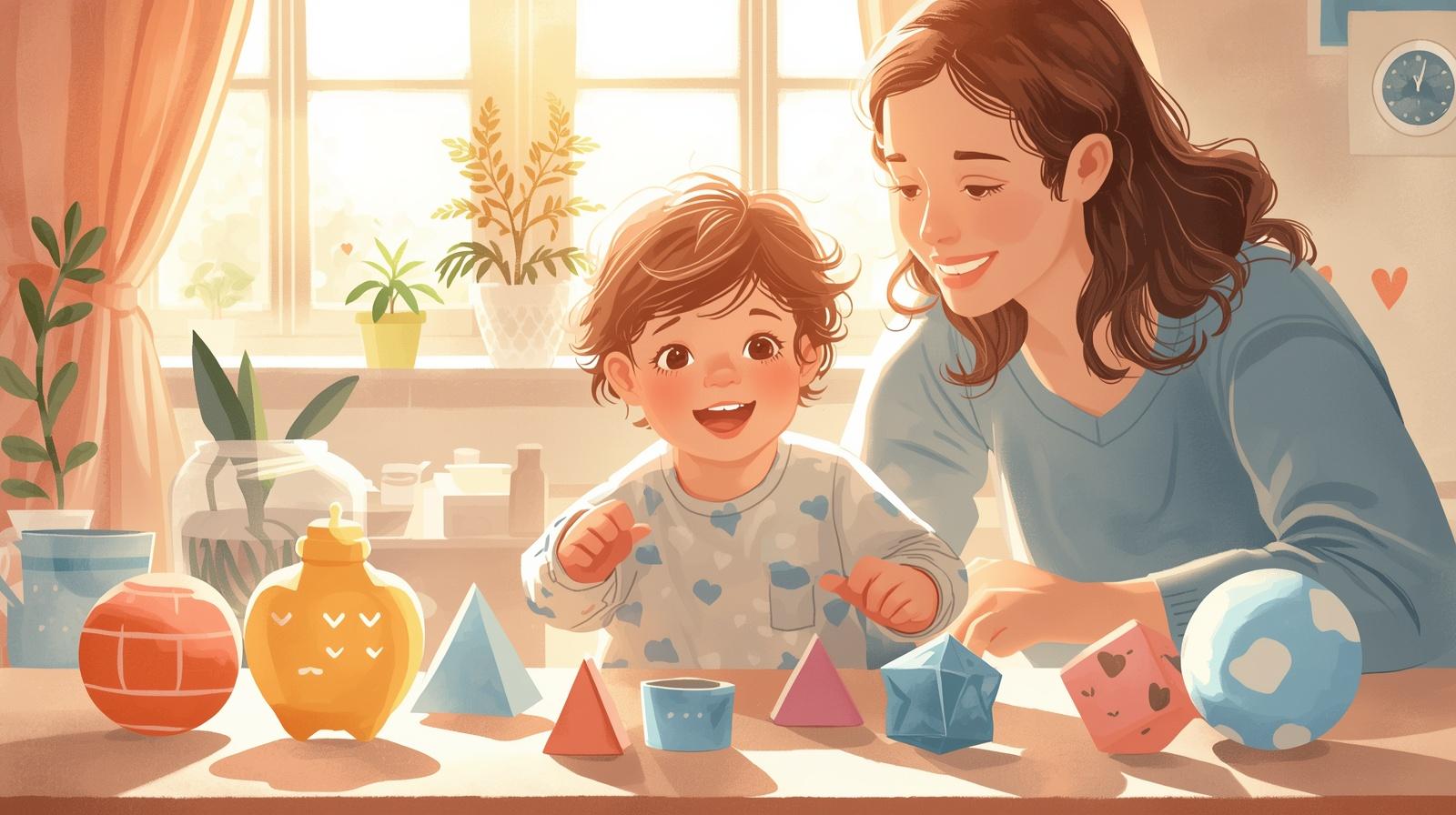
Wondering how to teach shapes to toddlers using daily objects—without buying special toys or forcing lessons? This gentle guide shows parents of children under 3 how everyday household items can naturally introduce shapes, build early thinking skills, and keep learning joyful, relaxed, and pressure-free.
“My toddler plays with everything… but are they learning shapes?”
If your child loves banging utensils, stacking boxes, or opening containers, you might wonder if any real learning is happening. The reassuring answer is yes. Toddlers learn shapes best when they see, touch, and explore them in real life—not when they sit and memorise names.
At this age, learning shapes is about recognition and experience, not perfect naming.
What learning shapes looks like under age 3
For toddlers, shape learning means:
- Noticing differences (round vs straight edges)
- Handling objects of various forms
- Hearing shape words repeated naturally
- Connecting shapes to real-life items
Naming shapes correctly comes later—and that’s perfectly okay.
Why teaching shapes with daily objects works so well
Using daily objects supports early childhood development by:
- Cognitive development: Builds observation and problem-solving
- Language development: Introduces descriptive words naturally
- Fine motor skills: Encourages grasping, placing, and stacking
- Emotional confidence: Familiar objects feel safe and comforting
Real-life learning sticks better than abstract teaching.
How to teach shapes to toddlers using daily objects
1. Circles in the kitchen
Your kitchen is full of circles.
Point out:
- Plates
- Bowls
- Lids
- Chapati or dosa
Say casually: “This plate is round.”
2. Squares and rectangles around the house
Every room has straight-edged shapes.
Look for:
- Windows (square/rectangle)
- Books
- Doors
- Tables
You can say: “This book looks like a rectangle.”
No need to quiz—just name and move on.
3. Shape talk during playtime
While your toddler plays, add simple shape language.
Examples:
- “That block is square.”
- “This box has straight sides.”
- “The ball is round.”
4. Sorting daily objects by shape
Turn sorting into a game.
Try this:
- Put round objects in one basket
- Flat or square objects in another
- Let your child explore freely
Why it helps:
Builds early categorisation and thinking skills.
5. Shape spotting during storytime
Books are a great bridge between play and language.
While reading:
- Point to objects and name their shapes
- Let your child point or touch
6. Bath-time shape fun
Even bath time can be a learning moment.
Look for:
- Round buckets
- Oval soap bars
- Square tiles
Keep it light and playful—bath time should stay fun.
7. Outdoor shape exploration
The outside world is full of shapes.
Notice together:
- Wheels (circles)
- Steps (rectangles)
- Signs (squares)
Tips to keep shape learning natural and stress-free
- Focus on one shape at a time
- Repeat shape words across days
- Accept pointing or touching as learning
- Avoid correcting or testing
- Keep activities short (2–5 minutes)
What you don’t need to worry about
- ❌ Your toddler mixing up shapes
- ❌ Not remembering names
- ❌ Losing interest quickly
All of this is normal developmental behaviour.
A gentle reassurance for parents
Some toddlers name shapes early. Others recognise them quietly for months before speaking. Both are signs of healthy learning. What matters most is exposure, repetition, and a calm, supportive environment.
You’re not behind—you’re building understanding.
Conclusion: shapes learned through life, not lessons
When thinking about how to teach shapes to toddlers using daily objects, remember that your home is already a classroom—and you are already the best guide.
Point, name, smile, and move on.
Repeat gently.
Trust the process.
These small, everyday moments are laying the foundation for confident thinking and joyful learning—one familiar shape at a time. 🌱
Leave a Reply