
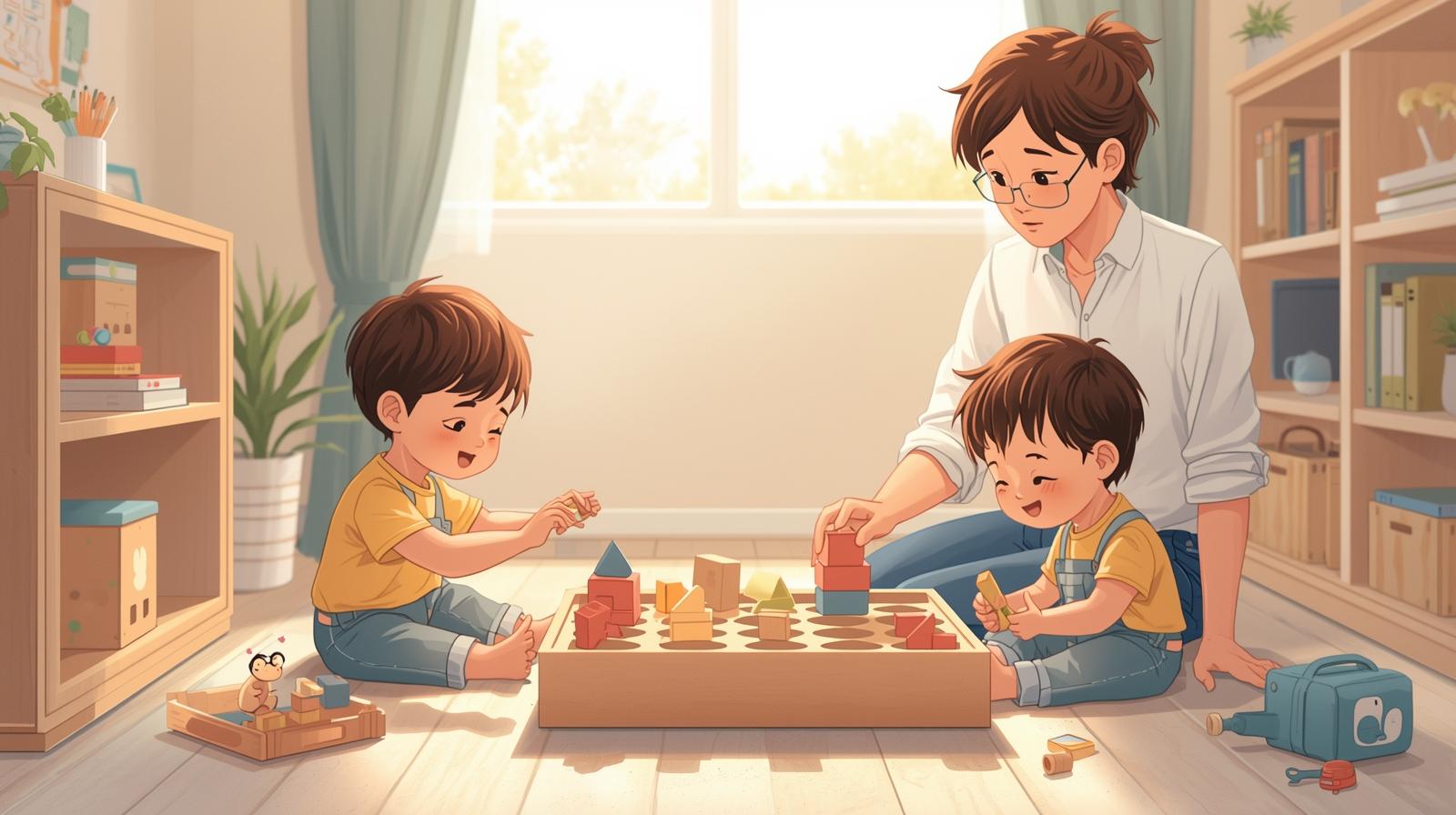
Worried about when and how to introduce math to your toddler? This guide on pre-math activities for toddlers (without numbers) helps parents of children under 3 understand how everyday play and simple routines naturally build early math thinking—without counting, worksheets, or pressure.
“Do toddlers really need math before nursery?”
Many parents hear phrases like “start early” and immediately think of numbers, counting, or flashcards. If your toddler can’t count yet—or shows no interest—you might worry they’re missing out.
Here’s the comforting truth: math doesn’t begin with numbers. For toddlers, pre-math skills are about noticing patterns, comparing objects, understanding space, and solving small problems—all of which develop beautifully through play.
What does “pre-math” really mean for toddlers under 3?
Pre-math activities help children build the thinking skills that later support counting and calculations.
These include:
- Sorting and matching
- Comparing sizes and shapes
- Understanding “more” and “less” (without counting)
- Recognising patterns
- Exploring space and order
And the best part? Toddlers already love doing these things.
Why pre-math activities matter in early childhood
Gentle pre-math play supports:
- Cognitive development: Logical thinking and problem-solving
- Language development: Words like big/small, same/different
- Fine motor skills: Grasping, placing, arranging
- Emotional confidence: Success through exploration, not performance
Strong thinking skills now make future math feel easier and less stressful.
Pre-math activities for toddlers (without numbers)
1. Sorting by colour, size, or type
How to play:
Sort toys by colour, kitchen items by size, or objects by type.
Why it helps:
Builds categorisation and comparison skills.
2. Matching everyday items
How to play:
Match socks, lids with containers, or identical spoons.
Why it helps:
Strengthens visual discrimination and memory.
3. Big vs small play
How to play:
Compare big and small balls, boxes, or utensils.
What to say:
“This one is big. This one is small.”
Why it helps:
Introduces size comparison—an early math concept.
4. Pattern play (very simple)
How to play:
Create simple patterns like spoon–cup–spoon or red–blue–red.
Why it helps:
Develops pattern recognition and logical thinking.
5. Filling and emptying games
How to play:
Let your toddler fill containers with blocks or balls, then empty them.
Why it helps:
Introduces ideas of quantity and space—without numbers.
6. Puzzle and shape play
How to play:
Use simple shape sorters or fit pieces into spaces.
Why it helps:
Builds spatial awareness and problem-solving.
7. Everyday math talk (without counting)
Use natural language during routines:
- “More rice?”
- “All gone!”
- “Fits inside”
- “Too big”
Why it helps:
Builds math vocabulary naturally.
Tips to keep pre-math play pressure-free
- Keep activities short (2–5 minutes)
- Let your child lead
- Repeat favourite games often
- Avoid correcting or testing
- Celebrate curiosity
What pre-math activities don’t need
Gently let go of:
- ❌ Counting drills
- ❌ Worksheets
- ❌ Formal teaching
- ❌ Comparing progress
Toddlers learn math best when it feels like play.
A gentle reassurance for parents
If your toddler isn’t counting yet, nothing is wrong. You’re not delaying math—you’re preparing the brain for it. These early experiences matter far more than memorising numbers.
Your calm presence and playful attitude make learning feel safe.
Conclusion: thinking first, numbers later
When it comes to pre-math activities for toddlers (without numbers), remember that math begins with curiosity, not counting.
Play.
Talk.
Explore together.
These small, everyday moments are quietly building strong thinking skills—setting your child up for confident learning in the years to come. 🌱
Leave a Reply