
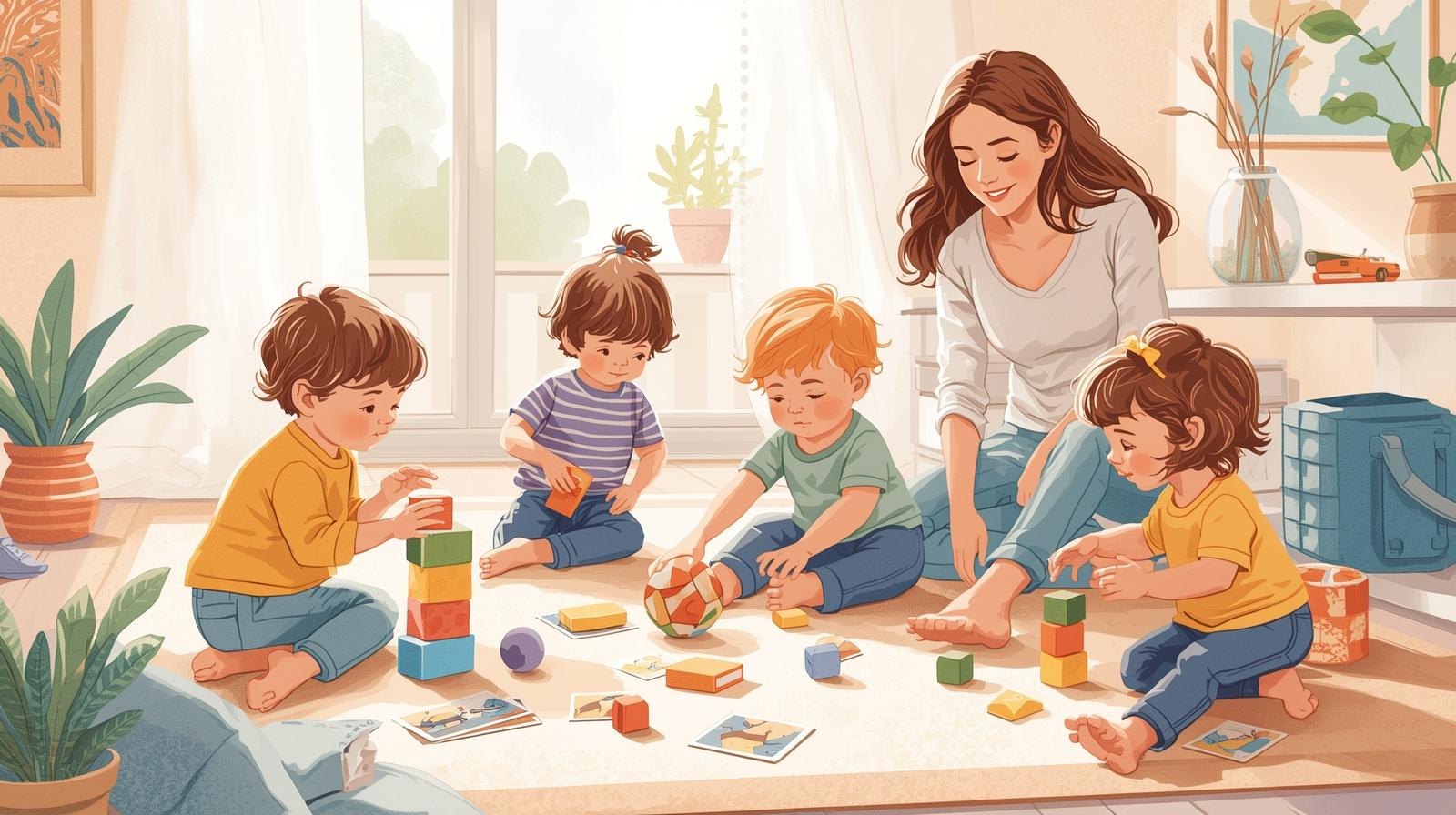
Looking for simple learning games for toddlers at home that don’t require fancy toys or long prep time? This guide helps parents of children under 3 turn everyday moments into playful learning—supporting early childhood development through fun, connection, and curiosity, not pressure.
“I want my toddler to learn… but I don’t want to push.”
If you’re a parent of a toddler, this balance can feel tricky. You want to support learning, but you also want your child to enjoy being a child. The good news? For toddlers, learning happens best through games—especially simple ones played at home with you.
No rules. No results. Just play with purpose.
Why simple learning games work so well for toddlers
Toddlers learn through repetition, movement, and interaction. Simple learning games:
- Feel fun and stress-free
- Match short attention spans
- Build skills naturally through play
Developmental benefits:
- Emotional: Builds confidence and connection
- Cognitive: Encourages thinking and problem-solving
- Physical: Supports coordination and motor skills
- Social: Strengthens communication and turn-taking
Simple learning games for toddlers at home
1. Name-that-object game
How to play:
Point to everyday objects and name them: “Cup,” “Door,” “Ball.” Pause and let your child respond—by pointing, babbling, or repeating.
Why it helps:
Builds vocabulary and listening skills.
2. Hide and find (peek-a-boo with objects)
How to play:
Hide a toy under a cloth and ask, “Where did it go?” Let your toddler find it.
Why it helps:
Teaches object permanence and problem-solving.
3. Stack and knock
How to play:
Stack cups or blocks together, then let your toddler knock them down.
Why it helps:
Develops hand–eye coordination and cause-and-effect understanding.
4. Action songs game
How to play:
Sing simple action rhymes with clapping, jumping, or waving.
Why it helps:
Supports language development, memory, and physical movement.
5. Sort and drop game
How to play:
Give your child a bowl and objects to drop in—spoons, balls, or blocks.
Why it helps:
Strengthens fine motor skills and concentration.
6. Follow-the-leader
How to play:
You perform a simple action—clap, stomp, spin—and invite your child to copy.
Why it helps:
Builds attention, imitation skills, and body awareness.
7. Pretend play with daily items
How to play:
Use a spoon as a microphone, a box as a car, or a cup to ‘pour tea’.
Why it helps:
Encourages imagination, language, and social understanding.
Tips to make learning games stress-free
- Keep games short (2–5 minutes)
- Follow your child’s interest
- Stop before frustration begins
- Praise effort, not outcome
- Play with your child, not over them
What simple learning games don’t need
Let go of these common myths:
- ❌ No worksheets
- ❌ No rules or scoring
- ❌ No forcing participation
- ❌ No comparison with other children
If your child walks away, learning hasn’t failed—it’s just time for a break.
A gentle reassurance for parents
Some days your toddler will love games. Other days, they’ll ignore them completely. Both are normal. Learning isn’t linear at this age—it’s layered.
Your warmth, patience, and presence are what truly make these games meaningful.
Conclusion: playful moments that matter
When it comes to simple learning games for toddlers at home, remember that the best games are the ones filled with laughter, connection, and curiosity.
Choose one game today.
Play it together.
And trust that these small, joyful moments are building a strong foundation for your child’s early years.
You’re doing beautifully. 🌱
Leave a Reply