
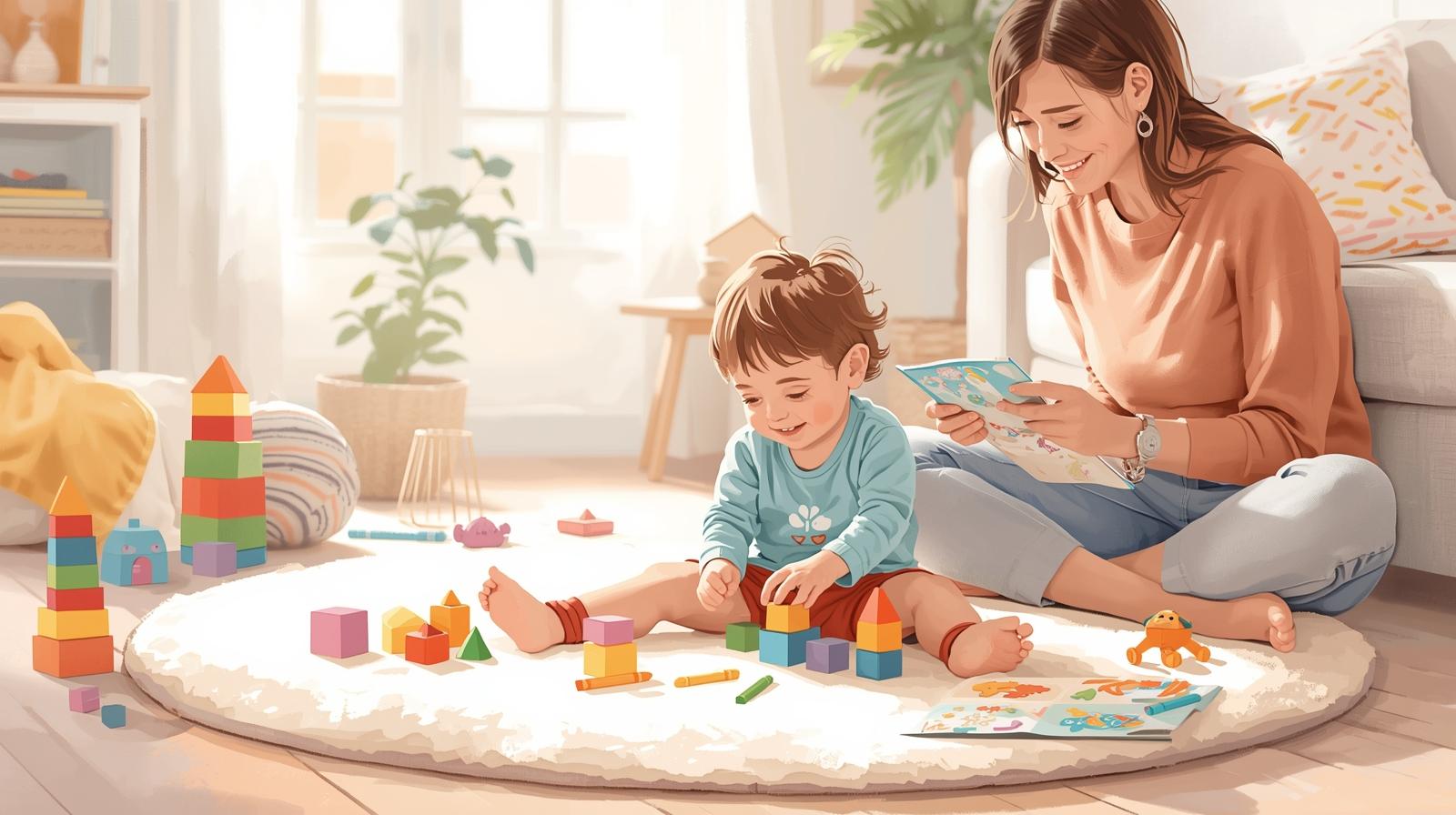
Looking for meaningful learning activities for 2-year-olds at home—without pressure or complicated planning? This guide helps parents of children under 3 turn everyday moments into joyful learning experiences that build language, confidence, and curiosity in a calm, age-appropriate way.
“My child is two… should they be learning more now?”
At two years old, children change fast—new words, strong opinions, endless energy. It’s natural for parents to wonder if they should “do more.” The reassuring truth is this: two-year-olds learn best through play, repetition, and connection—not formal teaching. Home is already the perfect classroom.
What learning looks like at age two
For 2-year-olds, learning is active and hands-on. They learn by:
- Talking and listening
- Moving their bodies
- Copying adults
- Repeating favorite activities
Short, playful activities done daily make the biggest impact.
Why home-based learning activities matter
Simple learning activities at home support:
- Language development: Rapid vocabulary growth
- Cognitive skills: Problem-solving and memory
- Physical development: Balance, coordination, fine motor skills
- Emotional growth: Confidence, independence, and security
No worksheets required—just intention and patience.
Simple learning activities for 2-year-olds at home
1. Talk, ask, and wait
Your child understands more than they can say.
Try this:
- Ask simple questions: “Where is the ball?”
- Pause and wait for a response
- Expand their words: “Yes, big red ball!”
Why it helps:
Builds language, listening, and thinking skills.
2. Sorting and matching play
Toddlers love organizing the world.
Ideas:
- Sort spoons by size
- Match socks by color
- Group toys by type
3. Pretend play with everyday objects
Imagination begins to bloom at two.
Try:
- Feeding a toy with a spoon
- Talking on a pretend phone
- Cooking with empty utensils
Why it helps:
Supports social understanding, language, and creativity.
4. Movement and outdoor play
Two-year-olds need to move to learn.
Daily movement ideas:
- Running, climbing, and jumping safely
- Dancing to music
- Pushing or pulling toys
5. Art without rules
Art at this age is about exploration, not results.
Simple activities:
- Crayons and large paper
- Finger painting
- Sticker play
Why it helps:
Develops fine motor skills and self-expression.
6. Reading and storytelling together
Attention spans are short—and that’s okay.
How to read:
- Choose picture-rich books
- Name objects and actions
- Let your child turn pages
7. Involving your child in daily chores
Daily life is full of learning opportunities.
Invite your child to:
- Put toys in a basket
- Help wipe a table
- Carry light items
Why it helps:
Builds independence, confidence, and cooperation.
What learning activities don’t need to include
Gently let go of:
- ❌ Worksheets or drills
- ❌ Long sitting sessions
- ❌ Pressure to perform
- ❌ Comparing with other children
At two, progress is uneven—and perfectly normal.
A gentle reassurance for parents
Some days your child will talk nonstop. Other days, they’ll test limits or refuse activities. That doesn’t mean learning has stopped. Growth at this age is messy, emotional, and wonderfully human.
Your calm presence matters more than any activity plan.
Conclusion: small moments, lasting learning
When choosing learning activities for 2-year-olds at home, remember that learning lives in everyday moments—talking, playing, moving, and laughing together.
Pick one simple activity today.
Repeat it often.
And trust that these loving, playful moments are building a strong foundation for your child’s future.
You’re doing a wonderful job. 🌱
Leave a Reply