
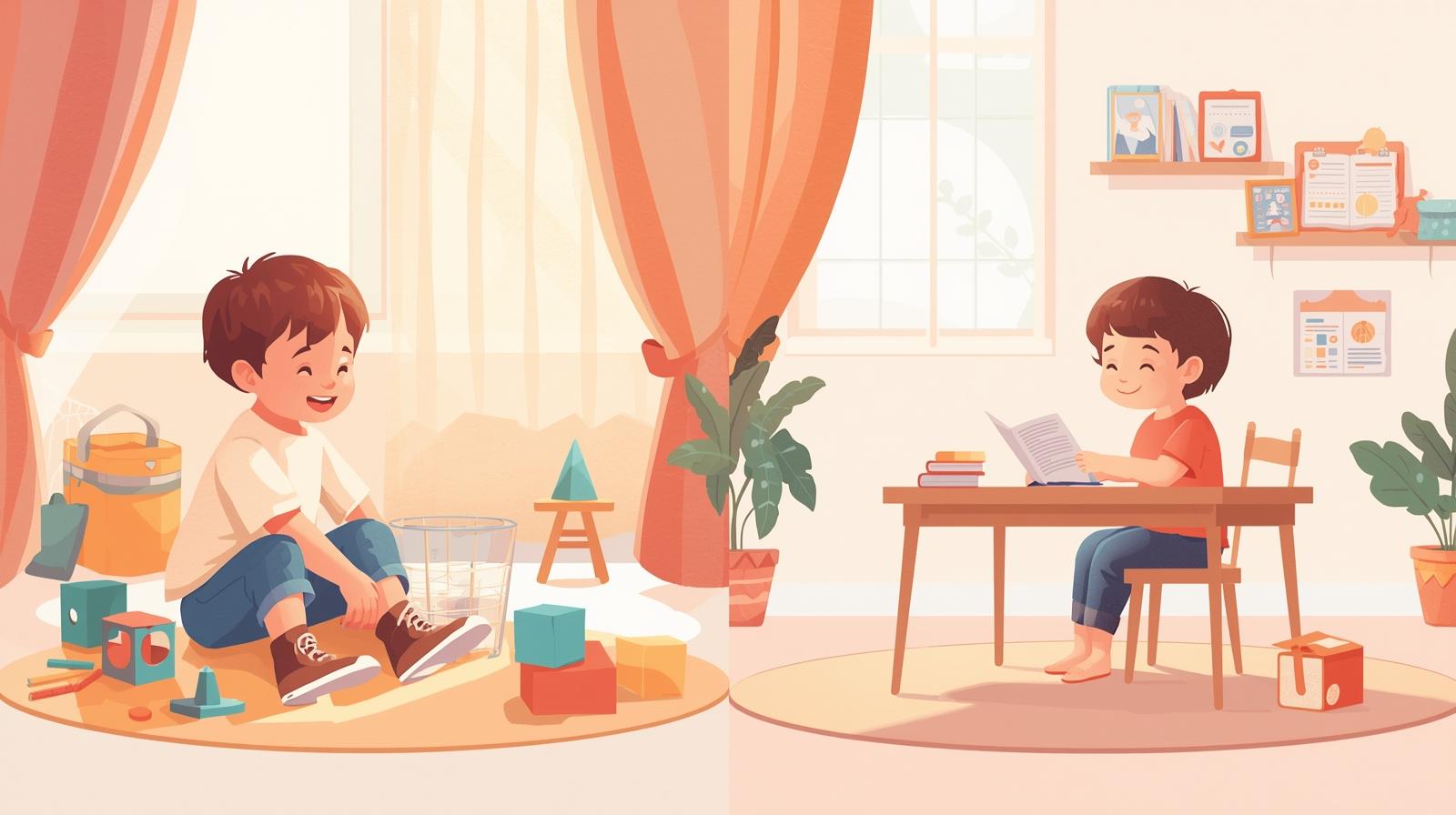
Confused about whether your toddler should be learning alphabets or just learning to adjust? This guide on Nursery Readiness vs Academic Learning: Know the Difference helps parents of children under 3 understand what truly matters before nursery—so you can support your child with confidence, not pressure.
“Everyone says start early… but start what exactly?”
As a parent of a toddler, you’re constantly hearing advice: teach ABCs, start writing, practice numbers. At the same time, your child might still be learning to separate from you or sit calmly for a few minutes.
This is where many parents feel stuck.
The truth is gentle and reassuring: nursery readiness and academic learning are not the same thing—and mixing them up often creates unnecessary stress.
What is nursery readiness for children under 3?
Nursery readiness is about helping your child feel emotionally and socially comfortable in a school-like environment. It focuses on how a child adjusts, not what they perform.
Nursery readiness includes:
- Feeling safe with new adults
- Managing short separations from parents
- Following simple routines
- Expressing basic needs
- Exploring independently
What is academic learning—and why it comes later?
Academic learning refers to skills like:
- Reading and writing
- Recognizing letters and numbers
- Structured worksheets
- Sitting for longer lessons
These skills require maturity in attention, motor control, and emotional regulation—abilities that naturally develop after the nursery years.
Pushing academics too early doesn’t speed up learning; it often creates resistance.
Nursery readiness vs academic learning: the key differences
Nursery readiness focuses on:
- Emotional security
- Social comfort
- Routine and predictability
- Independence
Academic learning focuses on:
- Knowledge outcomes
- Accuracy and results
- Formal instruction
For toddlers under 3, readiness builds the foundation on which academics later stand.
Why focusing on readiness benefits early childhood development
Emotional development
Children who feel safe adjust faster and cry less over time.
Social development
Comfort around teachers and peers helps children engage confidently.
Cognitive development
A calm, secure brain is more open to curiosity and learning.
Physical development
Self-help skills and movement prepare children for classroom activities.
Readiness supports the whole child—not just one skill.
Real-life example many parents relate to
A toddler who knows ABCs but cannot separate from parents will struggle more in nursery than a child who doesn’t know letters but feels emotionally secure.
This is why teachers value adjustment over academics.
What parents should focus on at home instead
Build simple routines
Consistent sleep, meal, and play times help children feel safe.
Encourage independence
Let your child try feeding themselves or putting toys away.
Talk, play, and connect
Conversation and play develop language naturally.
Allow age-appropriate play
Blocks, puzzles, pretend play, and outdoor movement matter more than worksheets.
What parents can gently let go of
- ❌ Comparing children
- ❌ Early writing expectations
- ❌ Long sitting activities
- ❌ Fear of being ‘late’
Children grow best when they feel accepted at their own pace.
A gentle reassurance for parents
You’re not holding your child back by choosing readiness over academics—you’re actually giving them a stronger start. Learning doesn’t disappear when delayed; it deepens when the foundation is strong.
Your calm support today shapes confident learning tomorrow.
Conclusion: readiness first, learning will follow
Understanding nursery readiness vs academic learning helps you make kinder, wiser choices for your toddler. Focus on emotional safety, daily routines, and joyful experiences.
Take small steps.
Trust natural development.
And remember—when a child is truly ready, learning flows easily and happily. 🌱
Leave a Reply