
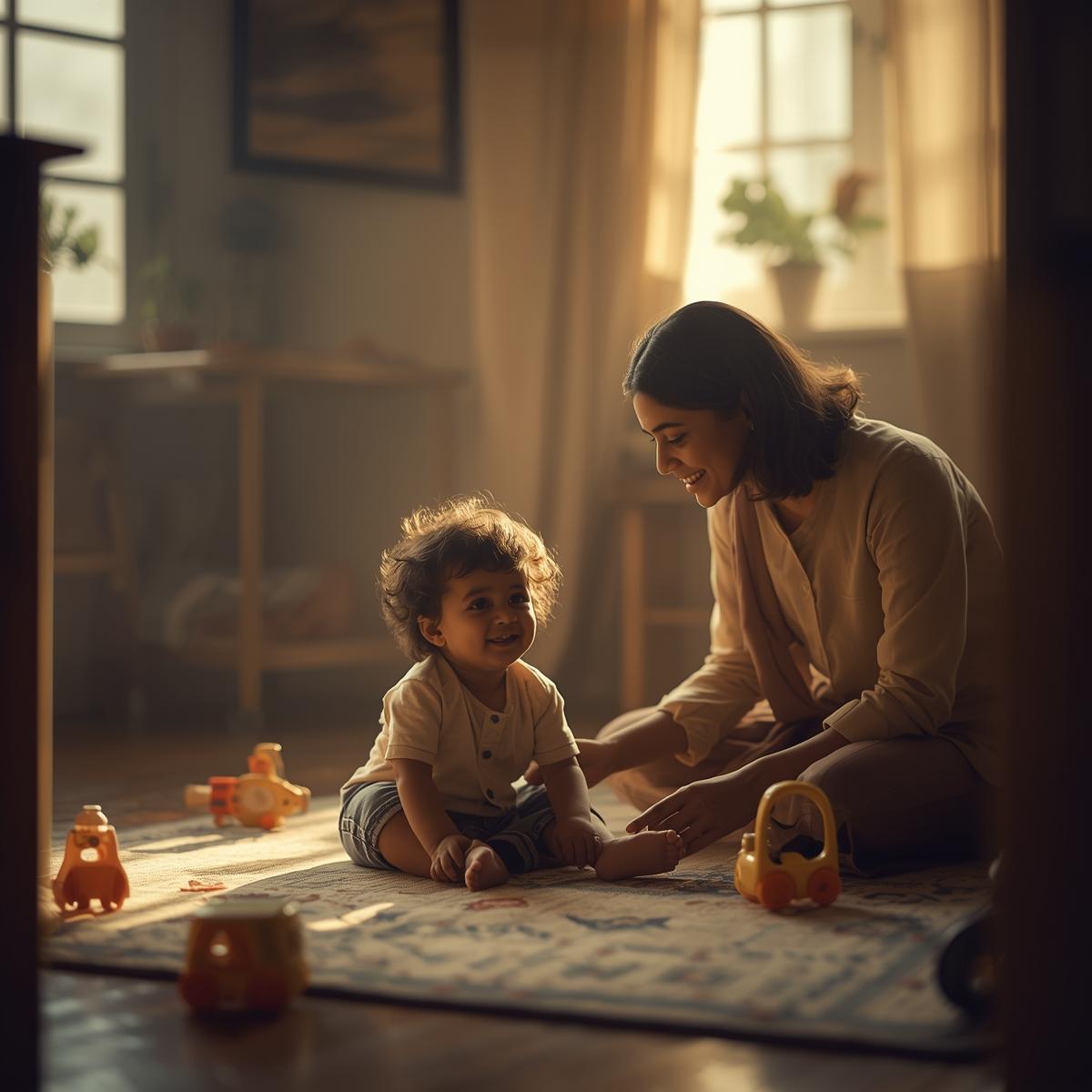
Wondering what is the right age to start learning for toddlers in India? If you’re a parent of a child under 3, this gentle guide will help you understand when learning truly begins, what “learning” really means at this age, and how simple everyday moments at home can support your toddler’s healthy development—without pressure or stress.
A Gentle Start: Every Parent’s Silent Question
As parents—especially first-time parents—it’s natural to worry.
“Should my child start learning now?”
“Is my toddler too young?”
“Am I doing enough?”
In India today, we’re surrounded by advice, ads for early classes, and comparisons with other children. Some toddlers are reciting rhymes at 18 months, while others are just starting to speak. This can leave parents anxious and confused.
Let’s pause, breathe, and understand one comforting truth:
👉 Learning doesn’t start at a fixed age—it starts from birth.
What Does “Learning” Really Mean for Toddlers Under 3?
For children below 3 years, learning is not:
- Writing alphabets
- Sitting still with books
- Memorising numbers or colours on command
Instead, learning looks like:
- Babbling and trying new sounds
- Touching, throwing, tasting, and exploring
- Watching your expressions and copying them
- Feeling safe, loved, and understood
A 1-year-old learns by shaking a spoon.
A 2-year-old learns by asking “why?”—even without words.
A 3-year-old learns through pretend play and stories.
This is real learning.
So, What is the Right Age to Start Learning for Toddlers in India?
The Simple Answer: From Birth—Gently and Naturally
In the Indian context, where families are rich in language, culture, music, and relationships, learning begins the moment a baby is born.
But here’s the key reassurance:
Formal learning has no place before age 3.
Experts agree that:
- 0–3 years is the foundation stage
- Focus should be on emotional security, sensory play, language exposure, and movement
- Pressure-free environments help the brain grow better
So if you’re asking “When should my toddler start learning?”—the answer is:
- Start early, but keep it playful
- Start naturally, not academically
Why Early Learning (Without Pressure) Is So Powerful
Early childhood development happens rapidly in the first 3 years. What you do daily—often without realising—shapes your child’s future.
🌱 Emotional Development
- Responding to cries builds trust
- Talking kindly builds confidence
- Secure children learn better later
🧠 Cognitive Development
- Simple conversations boost language
- Songs and stories improve memory
- Free play strengthens thinking skills
🤝 Social Development
- Watching family interactions teaches behaviour
- Playing with parents builds communication
🏃 Physical Development
- Crawling, walking, climbing improve coordination
- Movement supports brain development
Practical, Everyday Learning Ideas for Toddlers (0–3 Years)
You don’t need expensive toys or classes. Here are simple actions you can start today:
🏠 Talk Through Your Day
Describe what you’re doing:
- “Now we are washing hands.”
- “This is a red tomato.”
🎶 Sing Indian Rhymes & Songs
Traditional rhymes, bhajans, or lullabies help language and rhythm.
📖 Read Picture Books
Even if your toddler can’t sit still—point, name, smile.
🧸 Let Them Play Freely
Blocks, bowls, boxes—these build creativity more than screens.
💞 Follow Their Lead
If your child is curious about something, pause and join them.
Remember:
Consistency matters more than perfection.
A Loving Reminder for Indian Parents
You are not late.
You are not behind.
And you are doing better than you think.
Every child grows at their own pace. Comparing milestones only steals joy from this precious phase.
Instead of asking “Is my toddler learning enough?”, gently ask:
“Is my child feeling loved, safe, and curious?”
If the answer is yes—you’re on the right path.
Final Thoughts: Small Steps, Big Impact
So, what is the right age to start learning for toddlers in India?
It’s not about age—it’s about approach.
Start early with:
- Love instead of pressure
- Play instead of performance
- Presence instead of perfection
Tiny daily moments—talking, singing, playing, cuddling—create lifelong learners.
Trust yourself. Trust your child.
Learning will follow—beautifully and naturally. 💛
Leave a Reply